Friday, March 13, 2020

Tackling Poor Study Skills: Spoiler, No, Your Child Isn’t Just Lazy!

He’s just slack. She’s spending too much time on her phone, not on the books. He’s not as smart as the other kids in the class. Whether you’re telling yourself this or your child’s teacher is saying it to you, the reason for your child’s lack of progress may be more complex than “she’s just not that into school”. Study, like any other skill, takes instruction, support and practice to master. If your child’s study skills aren’t up to scratch, then their grades won’t be either. So, what can you do to help improve your child’s study skills at home?

What every tutor will encourage

How to improve study skills at home

The rules of effective study habits are:

  • Avoid procrastination
  • Avoid distraction
    Manage your time
  • Have a study plan

But what happens if your child doesn’t seem willing or capable of these? It’s time to dig deeper.

Why does your child struggle so much with study?

Does your child show the classic signs of bad study skills? A child puts off assignments to the last minute, submits subpar work, “just can’t do it” or simply doesn’t seem to care about their grades. Lazy right? For some children, it’s simpler to not try at all than to risk trying and failing. Your child’s mindset plays a major part in their approach to study, which in turn determines the quality of the work they produce.

  • Overcome their barriers to better study skills
  • Help them understand their study goals
  • Identify and correct any “gaps” in their support network

Learn More About How We Transform Student Attitudes, and Grades

Identifying the underlying challenges to good study habits

Study skills aren’t just about the ability to absorb information. Excellent study skills encompass not just their commitment to academia, but also their psychological state and their interpersonal skills. Your child doesn’t just need to read the book, she needs to be in the right frame of mind, and have access to support from teachers, tutors and parents or carers.  Your child’s emotional wellbeing may be the underlying cause of poor study habits. Getting to the bottom of any underlying issues will help them get back on track.

Does your child know even how to study effectively?

Good study skills actually mean studying less. It may sound crazy, especially if your child is already 10 or more years into their academic career, but does your child actually know how to study? For some kids, organising a workload, breaking it down into tasks and completing tasks on deadline can be as overwhelming as the subject matter itself. By struggling with the “how” of studying, your child will inevitably take much longer to get the same work done. In turn they feel like “they can’t do it”. In the time it takes another student to create an “A” grade paper, your child may do no better than a “C”. They may feel frustrated or anxious if not completely lost.

What else is going on?

Teens are always completely honest and open with parents, right? Your child may have other stuff going on that is impeding their ability to study effectively. If your child is suddenly reluctant to go to school, wags lessons or is unusually emotional, there may be an underlying issue. Check in with their teachers. Everything from first love to bullying can create a big distraction. Help your child navigate tough emotional waters so that they can get back on course.

Goals Vs Downtime

Achieving a goal feels pretty good. Getting the work done and dusted. Handing in a paper to be proud of. Acing a test. So does Xbox. It feels good too. If your child isn’t used to setting goals, then socialising, Netflix or Xbox becomes the goal. The goal is to feel good and their notion of feeling good is to simply have fun. Helping your child adjust their mindset around goals helps them to get those good feelings from achieving something, rather than just chasing the adrenaline they feel playing Fortnight.
Yes, your child needs downtime. Absolutely. It’s vital to their emotional wellbeing. By creating a goal based “pathway” to that downtime you are teaching your child not only study skills, but skills for their long-term wellbeing.

Good goal-setting skills include:

  • Setting specific goals. “Read 15 pages per day” is better than “read your textbook”
  • Setting measurable goals. “This assessment is worth 20%, so let’s aim for a minimum of 17/20.”
  • Setting achievable goals. “This maths is hard, so let’s focus on NAILING the first section this week.”
  • Setting relevant goals. “When you’re a nurse, you’ll need to know ALL about the pulmonary system, so memorising the sections in the heart will be useful for the rest of your life!”
  • Setting timely goals. “It’s not due until Tuesday, but if you get it done on the weekend, you can go out on Monday after school”.


How does their support network impact their study outlook?

A successful student doesn’t operate alone. Their support network enables them to reach their full academic potential by fulfilling their needs. Your child’s support network includes their teacher, their tutor, and you, their parents. If you and your tutor are actively encouraging your child to work hard at maths, but their teacher is telling them they’re not capable, who do you think the child will believe? Cue excuses not to try. Everyone in the support network must assist the child in feeling confident that they can do the work. That they can reach their full potential. If a member of your child’s team is letting them down, take action!

How can you create an environment conducive to better study?

  • Assist with organising their study schedule if they typically struggle with organisational skills
  • Ensure they’re basic needs for quality food, exercise and socialising are met
  • Create a distraction-free, comfortable working area
  • Give them clear instructions for effective study and assist them if they feel overwhelmed
  • Link study goals to recreational activities (finish this assignment and you can go to the movies)
  • Help them understand how immediate goals impact their “big picture” goals
  • Observe their study skills, look for any issues that interrupt their best work
  • Be patient. Learning new skills takes time.
  • Give credit where credit is due, encourage and praise good work
  • For particularly stressful subjects, engage a tutor who understands the mindset approach to study skills and also “clicks” with your child

Every parent meets with resistance. It’s not you, or your child to blame

Remember every trick in the book? Sure you do, you pulled those too. For some parents, managing resistance from their children is pretty simple. Aren’t they lucky! For others, changing habits in children and teens is an impossible goal. This is where the rest of your support network can step in and help. If you’re lucky enough to have a truly wonderful teacher, ask them for help.
If not, talk to us. We carefully recruit and train all our tutors, not just in teaching the work, but in building up confidence, knocking down barriers and helping kids enjoy the rush of achieving excellent results. We then match the RIGHT tutor with your child.

Our tutors are “that extra voice”. They’re not the voice of mum nagging about homework. They’re a mentor, used to the struggles of understanding the curriculum. They’re into the stuff your kids are into. They spend weekends hanging out with their friends – after they’ve finished their assignments. They know first-hand what your child is going through. They’re specially trained in helping children feel confident enough to give it their best.

And, “they’re not mum”. For some kids, “not mum” makes all the difference.

Would your child benefit from someone “not mum” to help them achieve better results?

Talk To Us Now


Stay up to date on Queensland School Shutdowns and learn how to Prepare For Temporarily Homeschooling Your Child Now

The post Tackling Poor Study Skills: Spoiler, No, Your Child Isn’t Just Lazy! appeared first on A Team Tuition.


from A Team Tuition https://ift.tt/38NXe8r
via IFTTT

Thursday, March 12, 2020

How to Prepare RIGHT NOW for School Closures in Queensland

Hopefully, it will never happen. Hopefully, you won’t be required to provide temporary homeschooling to your kids. With any luck, Queensland school closures won’t be necessary, and we’ll all go about our academic lives without major inconvenience. Officially now a pandemic, Queensland families are being urged to treat Coronavirus (COVID-19) as a serious issue and to prepare. So what can you do right now to prepare for school closures?

Preparing your child for this big change in routine

Mindset: This is the most important, and most overlooked aspect of study, be it at home or in the classroom. Your child’s mindset plays a major role in how receptive they are to learning, and how efficiently they study. For children already struggling with the right attitude to study, a major change in routine can be detrimental to their academic performance.

Make lemonade – homeschooling is an opportunity to help your child grow their academic potential

If there’s one thing we’ve learnt after almost a decade in transformative academic training, it’s that kids rarely get A’s in a vacuum. For every A on a report card, there are four people playing a vital role: the teacher, the tutor, your child and you. We’ve been turning C’s to A’s for a long time now, and the key ingredients are the right mindset, the right strategy, and the right support.

Temporary homeschooling affords parents a golden opportunity to empower children for better learning. Preparing your kids for temporary homeschooling isn’t just about getting them into a daily study routine, it’s about building the core skills required to be successful in life, not just at school. While teachers try every day to build capable learners, this is your chance to have first-hand, direct input into your child’s academic success.

How to help your child make the most of school closures

  • Be resilient: See this as a temporary setback, to adapt and do their best, regardless of the difficulties.
  • Be independent: Now is the time to encourage kids to take more responsibility for their studies because they don’t have a teacher dictating their every move.
  • Be reliable: Commit to a daily study routine and keep to their commitments.
  • Be self-motivated: Once the routine is established, make it their responsibility to get up and get it done!
  • Be confident: This disruption is unprecedented, and they are pioneering a new way to study. Celebrate their victories. Make sure they know you’re proud of how capable they are at such an uncertain time.
  • Be a problem solver: When tech problems or other struggles arise, encourage your children to overcome the problem themselves.
  • Be focused on goals: Set them achievable study targets daily and acknowledge their achievements.
  • Be their best: This is a golden opportunity for parents to help kids realise that they are capable, they do have the skills to meet their full potential, and with the right support they can do amazing things – not just at school, but in life.

What if they’re not receptive to homeschooling?

A teenager who wants to sleep late and play video games all day? Never! This never happens (*eyeroll*). Keeping them motivated during this time is not going to be easy, even if you’re there with them on lockdown. If you’re off to work during the day, most kids won’t make home study a priority. If school closures drag on, your child could risk a major dent in their academic record.

When to call in a pro to keep your child’s motivation up

A tutor specially trained in keeping students motivated and on course for academic achievement will aid you in supervising your ad hoc home school. Here are the top signs you need help:

  • Your child lacks motivation to get to work each day.
  • He or she uses minor setbacks as an excuse to avoid study.
  • Without constant supervision your student won’t get the work finished.
  • You keep hearing “I can’t do it” over and over.

The first mistake parents make is attributing all these excuses to laziness. Often, it’s actually self-doubt creeping in, and kids feel it’s simpler not to try than to try and fail. This is pretty common and definitely not reserved for kids. If your child is making a lot of excuses and not kicking their (attainable) goals, a course of tutoring with a mindset-trained tutor can adjust the way they “see” studying so that they can “do” study better. Getting past the mindset barriers can open the floodgates and solve those weekly homework meltdowns.


Forget toilet paper – “stockpile” teaching time!

In China, Japan and other countries heavily effected by school closures, the big issue has been educator shortages. Teachers and tutors have been forced into self-isolation in order to protect the student body, meaning they can’t hold classes. So how do you stockpile teaching time?

In other countries, online tutors have “sold out” long before school closures were announced. They’ve faced a massive shortage in online tutoring places. With “shop front” tutoring companies also affected by closures, parents faced with teaching the quadratic equation to their fifteen-year-olds (*hold me*) looked to the online teaching world for help, only to find they were sold out.

As part of the education industry and providers to Australia’s elite schools, we’ve already made expansion of our online tutoring capabilities a top priority. Our existing students will be our first priority and we’ll always guarantee their needs are met. 

Learn more about mindset-based academia

Reserve Online Tutorials Now

Set your computers up now for effective homeschooling

It’s time to get the kids’ laptops backed up and in good working order. Clean out unnecessary apps, update their operating systems/virus software, do a disc clean up (and where necessary defragment), and give it a good clean. If your children are using desktop computers, this includes taking off the cover and removing excessive dust (take necessary safety precautions before doing this). Make sure there is sufficient space on the hard drive for any new materials provided by the Department of Education or your school.

Now is also a good time to teach younger kids about keeping their computer organised, using a specific folder, ordered by subject, for school work. Teens already know how to use their computers better than you do… but kids under ten may need some help to learn the basics.

What to consider when planning for online homeschooling:

  • Is there a power point for long use of laptops?
  • Do you have a microphone and volume-limited headphones for your child’s laptop?
  • Will your child’s laptop need any extra hardware? If your child uses a desktop, will you need to purchase a cheap and cheerful camera?
  • Is the WIFI signal stable or do you need to relocate your router?
  • Is your WIFI plan sufficient for a sudden increase in usage, including video conferencing?
  • Does your NBN connection slow significantly in peak times? How will that affect your child’s ability to study when the rest of the neighbourhood is also receiving online lessons?
  • Do you have all your child’s school logins and passwords? Will they need any special software to study at home?
  • Can you access the school’s online learning aids at home? If your school uses Maths Online or other resources, do you have it all set up at home too?
  • If your children are younger and use your online credentials (or even phone hot-spotting for data), will they need their own during this time? How will you cope without your phone for hours on end?
  • Learn to use Do Not Disturb Mode (Mac) and Focus Assistant (Windows 10) to help minimise the number of distractions during working periods. Note: They’re very easy to use – just a few clicks – but permanently making changes to Windows 10 Focus Assistant hours requires registry editing, which is not recommended for novices!
  • Does your child need their own Zoom or Skype account?
  • If your tutor will be delivering their services online, what will your child need?


Preparing your homeschooling space

A good workspace has plenty of room, plenty of natural light, and is clear of clutter and distractions. For most families, there’s already a space where the kids sit to do homework but consider how suited it is for longer term study. Is their study area free of distractions during the day? What suits in the evening may be less suitable by day. Will you have multiple kids doing online study at the same time? How will you minimise sibling distraction?

Consider talking to other parents about planning online gaming downtime and social media “do not disturbs”. Even if the other parents don’t get on-board with structured homeschooling, they can at least tell their children not to send constant distractions to yours!


When will schools in Queensland close?

At this stage, if, when, and for how long Queensland schools will close is still up for speculation. Like all parents across Queensland, we’re hoping that COVID-19 passes without much drama and there’s no need for school closures at all. As responsible members of the education industry, we’re also taking a proactive approach to planning and preparing at this difficult time. Unfortunately, due to high demand, we cannot guarantee online tutoring placements for all enquiries. We will be forced prioritise existing students first.


Secure Your Child's Place in Our Online Program

The post How to Prepare RIGHT NOW for School Closures in Queensland appeared first on A Team Tuition.


from A Team Tuition https://ift.tt/33hxWyn
via IFTTT

Sunday, March 8, 2020

What happens if Coronavirus (COVID-19) Causes Queensland School Shut Downs?

The first rule of Coronavirus is “Don’t Panic”. The current infection trends have so many Australians worried about Coronavirus that we’re collectively getting a bit carried away. It never hurts to take precautions and plan but panicking has already proven problematic – inexplicably, around toilet paper!

For parents, a big concern is Queensland school shut downs due to Coronavirus (COVID-19). The lack of information available about school closure contingency plans is frustrating. The State Government is likely concerned about fuelling the fear around Coronavirus. So how do you plan for school closures when there’s no information available? For now, it’s not known if families will be expected to provide temporary home-schooling, or whether you’ll be able to keep sending the kids to school.

We’re all still hoping that this virus will be stopped long before school closures are necessary but here is what we know so far. Access the Federal Health website to stay on top of news around Coronavirus.


To learn more about A Team Tuitions services in the case of school shut downs, please get in touch.

How to prepare for school shut downs due to Coronavirus in Queensland. Mother looking for zen in the chaos

What happened when schools in Japan shut down?

Noriko Okita is mother to three kids under 12. She’s also a full-time pharmacist in Osaka, in the Kansai Prefecture in Japan. Her oldest daughter attends public school, followed by daily Cram School (private tutoring companies attended by many older children after school in Japan), her middle child is in a public state school and her youngest is in private day care. March is the end of the school year in Japan, so many students are missing their final exams before heading off to “spring break”.

As a pharmacist, Noriko continues to work full time during the COVID-19 shut downs. At present, there is no testing to determine if patients have a regular flu or Coronavirus. All patients are simply treated as “sick with a virus”. Despite her prefecture opting to shut down many schools, Noriko says she’s seen no noticeable difference in the number of people seeking flu treatments.


How Japan battled Covid-19 in the schoolyard

The Japanese federal government gave authority to each prefecture, city and private company to make decisions on closures, rather than ordering a “blanket rule” about school shut downs. Noriko’s youngest child attends private day care as usual but her older children go to schools that opted to shut down. How are Noriko and her neighbours managing?

  •  With the higher risk to elderly people, many families have chosen not to rely on grandparents for child care. The Japanese government is providing a small stipend for workers forced to stay home to care for children.
  •  Day care centres are currently “overbooked” and experiencing wait lists for additional days and new students.
  •  The Japanese government is providing “isolated school-based study” for children who simply have nowhere else to go. Children sit alone in a classroom, or with just a couple of their cohorts and avoid physical contact at all times. These children study, do art and are supervised but do not undertake regular lessons.
  •  For children old enough to be home alone, the government is providing affordable “meal deliveries’ where the delivery drivers “check in” on the kids. A little like meals on wheels for children.
  •  Private Outside School Hours Care is still available
  •  Graduation ceremonies are due this month but many have been cancelled. Some students have had to defer their final exams.
  •  Students were sent home with text books and access to a small selection of pre-recorded online lessons (these have now run out). Some schools have provided home-schooling curriculum for parents but it’s strictly optional. Noriko and her husband are currently working full-time and then home schooling their children at night.
  •  Many private cram schools (private tutoring classes) are now closed, including the one attended by Noriko’s daughter.
  •  Online tutoring is in very high demand with most of the larger online tutoring firms and English schools completely booked out and not accepting new students.
  •  Some private schools are offering one on one teaching sessions and group video “lectures” online.
  •  The US CDC and other authorities are reportedly urging school shut downs as early as possible to contain the disease.


Is temporary home-schooling an option in Australia?

Australia has an extensive home-school network and infrastructure for remote lessons and assessments. These however, are designed for parents who have opted to (or have no choice due to location or special needs) permanently home school their children. While home schooling has become very popular in Australia, the current system isn’t designed for “casual or temporary home schooling”.

Instead of relying on the current system, it’s more likely parents will face an “ad hoc” approach to keeping up with the curriculum. This could involve lesson plans arriving digitally from the school for parents to “teach” to their children at home. For parents unable to provide home school style lessons, it may fall to the child’s tutor to provide lesson instruction, either in person or online.

What can we learn from the school closure in New South Wales?

When Epping Boys High School uncovered 11 cases of Coronavirus on campus, the school conducted a thorough disinfection while students stayed at home. Students and staff who test positive or have had close contact with those infected have now entered 14 days of self-isolation. At the time of publication, the school was back to business as usual. With more cases transmitted on Australian soil however, there are other New South Wales schools considering full shut down.

The Victorian Government has reassured parents that “Special Provisions for Classroom Learning” will apply to Coronavirus affected students, meaning students should be provided with extra time and assistance to catch up if their school is shut down.

There are reportedly moves to digitise lesson plans and to ensure all students have access to digital learning aids. From there, students can log in and continue with their studies with assistance from parents in a temporary home-schooling fashion.

How can Australian families prepare for Coronavirus at school?

First, do not panic. It may never happen and if it does, it may only affect small groups of students, not the entire student body. The best preparation you can do right now is to teach your kids to take precautions, including proper hand washing. While little is yet known about COVID-19 transmission and long term effects, children have so far, suffered fewer symptoms than adults. Kids are generally considered at lower risk of serious health complications than the elderly and immunocompromised. But what if the worst happens?

Speak to your school

Speak to your school about their in-house contingency plan around possible closures. In Australia, it’s likely that the State Governments will be responsible for school closure policy so very little information will be available until there is an issue. Discuss your situation with the OSHC team at your school.

Speak to your boss

In Queensland, it is a criminal offense to leave children under 12 home alone for an unreasonable amount of time. You may wish to consult with your workplace about their Coronavirus contingency plan. If you’re able to, your workplace may allow for telecommuting while schools are closed. As older people are highest risk, relying on grandparents may not be an option. If school closures occur, alternative child care may be over booked and impossible to find. Consider making a contingency plan now.

Speak to your tutor

Whether you’re using “shop front’ or one on one tutoring services, you may need to change the way your child receives lessons. In Japan, online tutoring services sold out and became waitlisted very quickly. If your tutoring firm offers online tutoring, speak to them immediately about availability and priority for existing students in the event of school closures. For our clients, we currently offer limited online tutoring across Australia. Our online tutoring will be offered first to existing students. Please get in touch now to register your interest in online tutoring in the event of Queensland school closures.

Is A Team Tuition taking new online tutoring students?

At present, online tutoring is a small part of the work we do with our students. Our priority of course, is to provide an exemplary service to our existing kids. That means increasing our capacity to teach students online in the event of school shut downs. At present we provide online lessons via Zoom video conferencing and plan to increase this capacity if necessary.


Please complete the form below to discuss your child’s needs.

The post What happens if Coronavirus (COVID-19) Causes Queensland School Shut Downs? appeared first on A Team Tuition.


from A Team Tuition https://ift.tt/2xk0lrD
via IFTTT

Thursday, January 9, 2020

What Learning Language Is Your Child?

Everyone is different. We all look different, even identical twins have some disparity. We all speak differently; depending on a person’s origin, they might speak another language or have an accent. Every person also has their own preference regarding food; apparently, not everyone likes chocolate! 

So, it is not that surprising that every single student learns differently! 

Think about it… a teacher’s verbal recap of a historical event, such as World War I, will not embed into all 26 student’s minds. It might work for one or two students, but for others, it likely goes in one ear and straight out the other.

This is why most teachers ask students to take notes, draw diagrams, read, or otherwise complete a range of diverse activities. This allows most, if not all, the students some way to learn that meets their individual needs. 

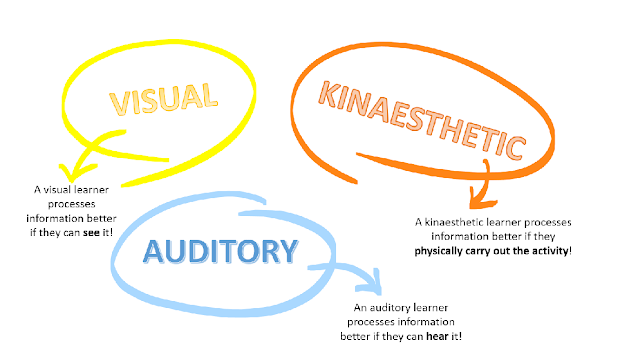
There are three broad categories of learning languages, which represent a key method of learning:

Of course, people can be a combination of two types! Personally, I am a visual-kinaesthetic learner! This means that I learn best when I can visualise and actively engage with the context. Some methods I use, include drawing diagrams, making flashcards, and answering practice questions while I am working out at the gym! 


Not only does the information embed into my brain a lot easier, but sometimes I even have fun while studying! 


That is why, at A Team Tuition, we understand and appreciate the importance of creating learning strategies unique to each individual student. This allows us to communicate more effectively and teaches our students how to learn smarter, not harder. 


So… even if they don’t know it yet, every student has their own unique language that will help them absorb information into their brains more effectively and time-efficiently. 


The key to success is to unlock this knowledge… help your child discover their learning language! A quick way to do this would be to choose three difficult, unfamiliar words (this will vary depending on your child’s age). For the first word, just read out the definition. For the second word, ask them to read the definition. Finally, for the third word, ask them to draw a diagram/ picture of the meaning. 


Give it a couple of minutes and then ask them which definitions they still remember. It is also important to ask your child how they think they learn best. Depending on the results, you will likely be able to determine whether your child is best suited to an individual or combined category. 


Now, you just have to implement the suitable learning methods, sit back, relax, and watch as your child starts to thrive! 


Contents

  • Visual Learner
  • Auditory Learners
  • Kinaesthetic Learners

Visual Learners

As one of the most common learning languages – visual learners remember information more effectively if it is presented to them graphically. They prefer to see how things take shape. They visualise concepts to comprehend it’s meaning. 


This form of learning is typically introduced during early childhood. How? Well, think back to all the picture books… the images which brought the words to life! The countless flashcards to associate the letter ‘A’ with ‘apple,’ ‘b’ with ‘bee,’ and ‘c’ with ‘cat.’ Not to mention the countless episodes of Sesame Street, which discretely taught life-lessons through puppeteering! 


Now, fast forward a few years to school… how can this learning language be used to help your child maximise their learning?


Well, various visual learning techniques can be implemented, depending on the assessment. 

For example, for exams and general revision, students can utilise:

  • Flashcards
  • Diagrams
  • Picture maps
  • Tables
  • Read over class notes 


However, for speeches, students are advised to write out their speech multiple times. 


Personally, I advise my visual learners to write out their weekly notes in poster format and then blue-tac it to their wall, so they can keep reading it and refresh their memory during the lead up to the exam! 


Colour association is also a fantastic tool that is seriously underrated! This method can be used regardless of the assessment type. It allows the brain to relate the content to a specific category. Once categorised, it is easier to recall the information collectively. A major tip is to stick to colours already socially constructed for a particular purpose. 


For example, in the context of a history source evaluation, highlight primary sources or supporting information in green, secondary sources in yellow, and contradicting information in red. 


So, next time your visual learner is finding it hard to focus on reading countless chapters of a textbook, try encouraging them to make posters or flashcards featuring the content. Not only will this help them comprehend the information more efficiently and quickly, but it will also stop them from getting bored and falling asleep! 


Auditory Learners 

While auditory is not the most recognised form of learning, we all actively engage in it every day!  


From speaking to others, listening to the radio while driving, enjoying an audio-book, to getting frustrated at the GPS voiceover, we all use some form of audio. 


So really, it is no surprise that it is one of our most significant tools of learning! 

Some key study methods for auditory learners include:

  • Recording speeches/ notes 
  • Listening to a recording of speech/ notes repeatedly and in different environments
  • Reading speech/ notes out-loud 
  • Having a family member, friend, or peer read notes out-loud or quiz student
  • Having a general discussion with someone and explaining key concepts
  • Listening to podcasts 
  • Listening to music (without lyrics preferably) while studying

Tip: students can record their speech and listen to it while they sleep! It is also recommended that students listen to the recording three times throughout the days leading up to the speech. This will help to embed it into their memory and may make it easier for them to recall it on presentation day! 


Kinaesthetic Learners

How do you tell if your child is a kinaesthetic learner? 

Well, students with this specific learning style are typically quite fidgety and look like they have ants in their pants! Whether it is chewing, tapping their feet, bouncing their knees, or clicking their pen, kinaesthetic learners like to keep moving.

Unfortunately, this does make it hard for them to stay focused when in slow-paced environments.  Instead of absorbing content while reading a textbook in a silent classroom, a kinaesthetic learner will likely be falling asleep, distracting others, and be very susceptible to distraction from other students. This frequently results in kinaesthetic learners being labelled the ‘trouble maker’ or ‘jokester’ of the class. 

However, if students learn to funnel and utilise all this energy into working smarter, not harder, they will unlock their learning potential! 

To achieve this, an ‘emphasis’ must be put on ‘movement.’ Some key learning techniques for kinaesthetic learners include:

  • Board games
  • Answering practice questions while doing physical activity (e.g., kicking or balancing a ball)
  • Using clay to model scientific diagrams (useful for science revision)
  • Playing with a ball while explaining concepts
  • Playing simple memory games
  • Building models with Lego/other building materials
  • Other hands-on activities/games

Remember, repetition is key! You can change the activity, however, use it to reinforce the key concepts. 

It might also be useful to combine kinaesthetic learning techniques, with either visual or auditory techniques for a more significant impact. 

So, there you have it… A Team Tuition’s broad overview of the three main learning languages!

Of course, students can use a combination of any of the above methods, as everyone learns differently. No one method is going to work for all students.

It is for this reason that it helps to be aware of what learning language your child is more in-tune to, as you can cater to their individual needs and teach them how they learn best! Not only will this help them thrive in school, but it will also prepare them for life-long learning!

However, if you or your child is struggling to implement the methods, feel free to contact one of our friendly staff at A Team Tuition! Our team of highly trained and experienced Academic Personal Trainers has a limitless amount of techniques that can be moulded to suit each individual child. Together, we can all start to learn smarter, not harder!

START MY CHILD’S TRANSFORMATION TODAY!

Whether you need help with homeworkassignment & exam preparation or just a confidence and motivation boost at school – we can help!

Tell us about your child and we will get in touch as soon as possible!

The post What Learning Language Is Your Child? appeared first on A Team Tuition.


from A Team Tuition https://ift.tt/2tJIsRh
via IFTTT

Tuesday, January 7, 2020

Why I Joined A Team Tuition

Before I found A Team Tuition, I did not have the best first-job experience!

Like most teenagers that graduate high-school, I was in desperate need of a job.

In a small town, I thought I was lucky to find full-time employment in a small, fluorescent-lit, and windowless office that was relatively close to where I lived.

The first few months were like a honeymoon period.

Only 17, I was the youngest in the workplace by many, many, many years.

After a while, I noticed that other staff members would give me all the little, tedious tasks that they couldn’t be bothered to do themselves.

They would expect me to prioritise their tasks over my own work. Eventually, my age, kindness, and compliancy were completely taken advantage of by other staff.

Every day I dreaded going to work. I found myself continuously asking, ‘am I good enough’? This took a massive toll on my mental-health.

The constant criticism made me question my own self-worth.

It made me question my competency. And despite being an A-student, it made me question my intellectual ability.

However, despite all the ups and downs, I do appreciate the skills, knowledge, and resilience that I developed during my time there.

It threw me in the deep end and taught me how to swim. It also provided me the financial resources and motivation to pursue my career aspirations and go to university.

It made me realise that I wanted to make a real difference; not just to my boss’s bank account.

So, it taught me a lot. From any experience, good or bad, there is always a lesson to be learnt.

Personally, I learnt many things, from interpersonal skills and business procedures to the power of resilience, self-belief, and determination. It shaped me into who I am today.

Taking this experience into consideration, when I moved to Brisbane to attend university, I made sure to spend quite some time looking for a job that would allow me to make a real difference.

I wanted to help others… take pride in my work, and most of all… just feel happy.

The A Team Tuition advertisement for new tutors/ APTs (Academic Personal Trainers) caught my eye immediately. After reading the job description, it was as if all the pieces of the puzzle fell into place.

I just knew it was the job for me!

I was excited about the opportunities it would bring… as with my high academic achievements, I could help, educate, and mentor kids throughout their schooling.

I knew this was a great chance to make a difference in someone’s life.

The job requirements were also super flexible – meaning that I could work around my university studies and other commitments.

With all that said, I don’t think it could have taken more than a few seconds for me to hit the ‘APPLY’ button!

From the first phone-interview with Harley, I knew this was something special that I wanted to be a part of.

His enthusiasm, passion, and love for his job were apparent in his every-word.

I remember that one of the first questions I asked was about A Team Tuition’s team environment – were they a family?

Everyone I spoke to, could not hold the team dynamic in higher regard.

They were all proud, happy, and grateful to be a part of it.

What really makes A Team Tuition stand out from the crowd is the support network it provides! Not just to the clients, but to their staff.

The whole office crew is with you every step of the way. From the fantastic training that Katy provides, client services excellent communication, to Stuart managing the content and of course, the success managers… everyone works together as one.

As an APT, I report directly to my success manager Peta. She is there to listen to any of my concerns, ideas, or other issues.

Personally, she has helped me grow my own skillset so much. From new concepts, ideas, how to communicate content to students to celebrating every transformation with me!

It is phenomenal what you can achieve when you have that type of support behind you. It makes me feel like I have the ability and resources to do my job properly.

As a result of this, in my first few weeks, I had helped a year 11 student transform his biology grade from a D to a B!

Now while the grade is fantastic, what was even better- was the self-belief that it sparked within him. He soon wanted to improve his grades for all his subjects.

Soon after, I helped another student transform a B in English to an A!

Then the transformations just kept rolling in!

But, while I was proud of each and every student for their results, I was prouder of their growth in self-belief, motivation, and determination.

Being an APT has been the most rewarding, insightful, and eye-opening experience! It has made me realise that you can be passionate about your job and do what you love. It has made me realise that you can actually be excited to go to work.

That’s when work doesn’t feel like work anymore.

I might have got my foot in the door as a tutor, however becoming part of the A Team, also provided many other opportunities.

Straight away I got on-board with content management writing blogs… this allowed me to fulfil my passion of writing. I also joined in with the school programs, which have been one of the best experiences of my career so far.

So, whether you’re a university student, wannabe teacher, or just someone with a passion for education that wants to help others and enjoys working with children, apply to become a member of the A team.

The team at A Team Tuition is so supportive and the job is so flexible, transparent, and rewarding that you will never want to leave! 

 JOIN OUR TEAM

Tell us about yourself and we will get in touch as soon as possible!

The post Why I Joined A Team Tuition appeared first on A Team Tuition.


from A Team Tuition https://ift.tt/2N4aCgM
via IFTTT