Thursday, July 26, 2018

Two Brisbane Girls Achieve The Impossible In One Term

It is without a doubt that the most rewarding part about tutoring here at A Team Tuition is witnessing the seamless transformation of students unfold right in front of our eyes. With the recent launch of Project limitless Brisbane, we sat down with our winners Sarive Zena and Esther Abiya, whom, over the course of semester one, have truly embodied what it means to be limitless. Their resilience in overcoming adversity and taking control of their education is the epitome of the type of young adult that A Team Tuition strives to foster.

In 2017, Project Limitless, a program designed to completely transform a struggling student into a master of their own academic strategy, was launched on the Gold Coast. In line with A Team Tuition’s values of Analysing, Inspiring, Teaching and Mentoring, the program, worth $5000 guided our winners Skylah and Waide from failing students, to achieving A’s and B’s in all their subjects,

Following this success, in 2018 A Team Tuition launched Project Limitless Brisbane, with an added upgrade –a $10,000 package! . This project aimed to validate our results with Skylah and Waide and to provide support for our theory that success is merely the combination of having a growth mindset, a solid support network, and the right academic strategy. During the application process, after hearing the story of sisters Esther Abiya and Sarive Zena, we could not find a pair more deserving of the scholarship prize and thus, one scholarship became two.

Excited to embark on a journey to achieve illustrious ‘A’ grades, Esther and Sarive began their journey with us in April, alongside two of our best and brightest Academic Personal Trainers Lexie MacHunter and Katie Jansen. Prior to commencing the project, Esther and Sarive lacked the strategy to flourish academically. Although motivated, the girls were treading water, only just managing to stay afloat. With every ‘average’ grade, their fixed mindset that they would never succeed academically was justified. The girls knew that they needed to be pointed in the right direction – this was the underlying motivator for them to hit submit on their applications at the start of the year. A Team Tuition believed in Esther and Sarive’s insurmountable level of motivation, and within just one term of tutoring, the girls triumphed, heads above water, progressing from a mere pass grade, to A’s and B’s! It appears that the valuable mentorship from tutors Lexie and Katie, combined with the drive and open-mindedness of Esther and Sarive was a perfect recipe for success.

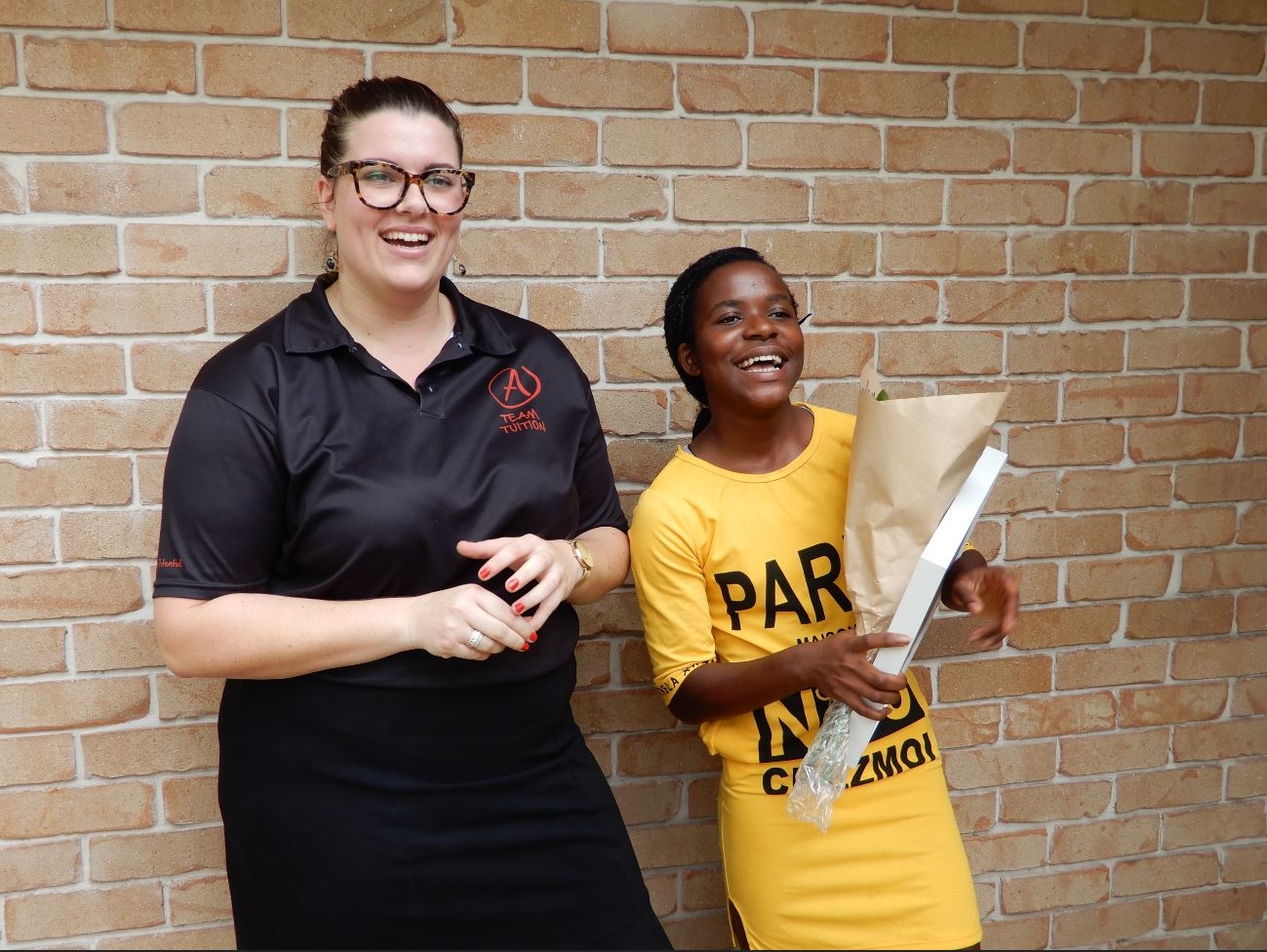
Esther and Lexie

To kick-start her academic make-over, Esther was paired with one of our most experienced and confident Academic Personal Trainers, Lexie MacHunter. Having completed an engineering degree, and currently studying law, Lexie’s evident comfortability with change and desire to learn were attributes that we believed would perfectly match Esther.
Capture3

From day one, both Lexie and Esther showed an unyielding desire to make the most of what the scholarship had to offer. In a recent interview, Lexie praised Esther’s mature outlook when it came to goal setting.

“Esther’s attitude was always in the right place. From the outset, she knew what an opportunity this was and has gone out of her way to work towards the goals that we set together.”

From Lexie’s perspective, taking Esther back to the basics, to develop her maths and science skills, was the most important determinant of her progress. This technique surely paid off, with Esther receiving an A+ in Science on her first assignment since starting tutoring. Progress didn’t stop here – the successes continued to stream in. In the following weeks, Esther received an A in Information Computer Technology, an A in Religion (and was very proud to receive an A+ in the Knowledge and Understanding criteria) and an A- in History! Overjoyed with her results, Esther had nothing but praise for the help given to her by Lexie.

“Lexie is absolutely amazing! She makes tutoring really enjoyable and exciting. She constantly challenges me to push myself to be the best version of myself.”

Lexie believes that her success with Esther is the result of the way she approaches tutoring. Rather than adopting an authoritative stance like a teacher, Lexie claims that she wanted to portray herself as a mentor and a friend. And She wanted to ensure that the A Team Tuition collective also contributed to Esther’s development.

“It’s called A Team for a reason; students and Academic Personal Trainers both benefit from our valuable support network.”

According to Esther, having an adult, aside from her parents and teachers, whom she could build rapport and trust with, was a key factor contributing to her success.

“I don’t only look up to her as a tutor, but also as a mentor and a friend,” smiled Esther.

Esther’s semester one grades reflected her commitment to the project. Keeping in mind that Esther’s results from Term one (without Lexie’s help) contributed to her overall grades for the semester, receiving B+’s and an A- in such a short period of time has left everyone here at A Team wondering what she could possibly achieve throughout the rest of the year!

IMG_3572

Esther herself is proud of her results and is astounded by the fact that her attitude and approach towards school has switched so dramatically.

“My perspective on school has changed so much for the better. I am constantly learning on how to become a better student and be a wiser person.”

Lexie is finding Esther’s attitude is rubbing off on her as well remarking that, “Esther’s drive and determination is contagious; it’s hard not to be the same!”

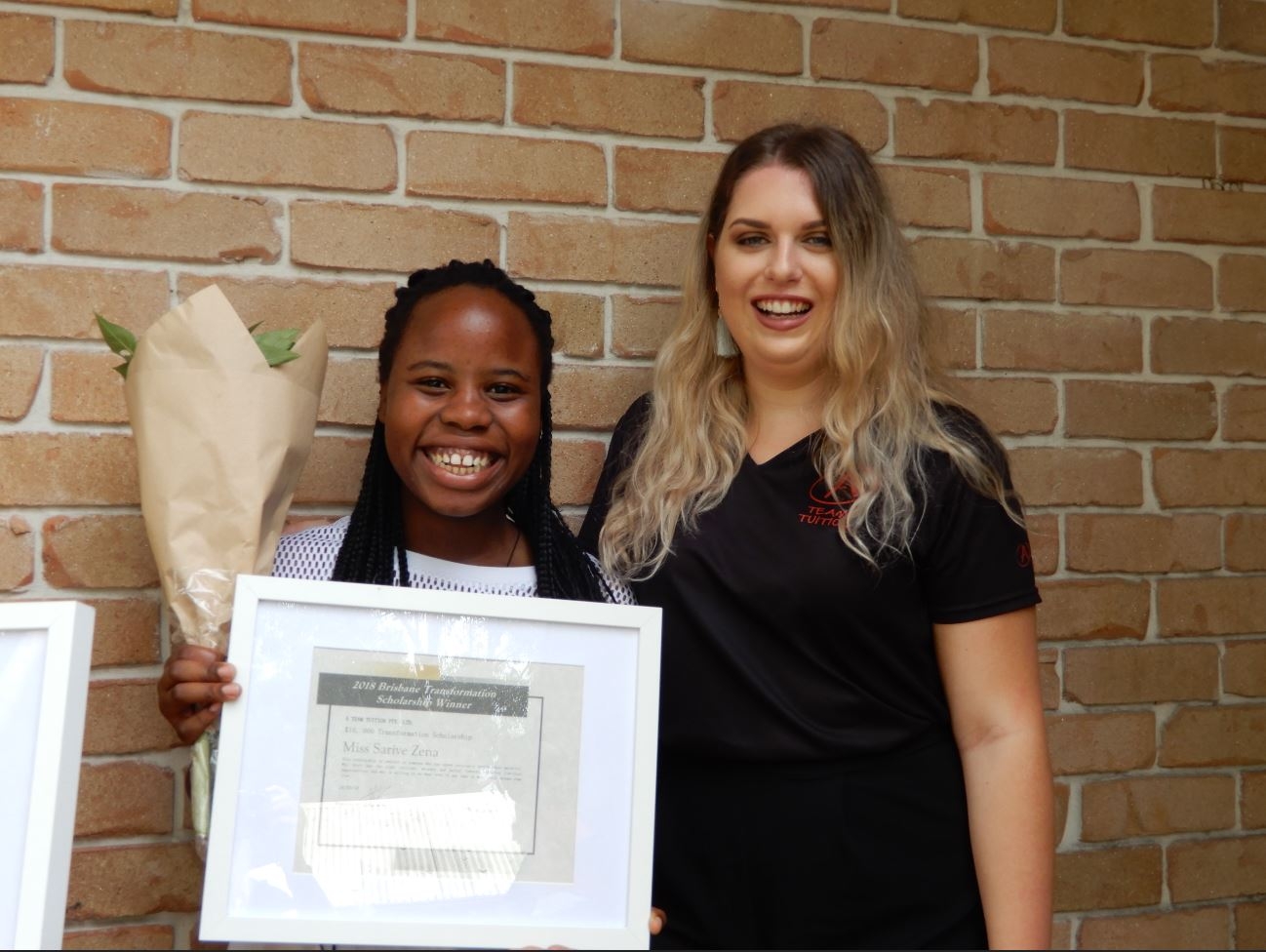
Sarive and Katie

Sarive and Katie’s relationship mirrored that of Esther and Lexie’s, but with Sarive being a Year 12 student, her future plans were the underlying motivators for her school transformation goals. With awareness that Sarive’s primary focus was improving her overall educational portfolio in preparation for her post-school career, Katie identified that the best approach for tutoring Sarive was to identify the common denominators across all of her subjects that were generally holding her back.

Katie commented that within one session she was able to identify Sarive’s academic strengths and weaknesses.
Capture2

“Her English skills were a bit behind and this made it difficult for her to believe she could lift her grades. When first reading over her work, I realised that she was making mistakes in her spelling, grammar and punctuation which could easily be avoided by editing and reading over her work.”

Katie also recognised that Sarive struggled to articulate and comprehensively explain her ideas, limiting the quality of her assessment pieces. Katie made a point of noting that it wasn’t that Sarive didn’t understand what she was learning, rather, she struggled to reiterate information and explain it in her own words. Sarive expressed that Katie helped her address this issue.

“Katie did a fantastic job. She was a good listener. She understood me and picked up clues of what I was trying to say and helped me how to say them.”

These English-based difficulties are common for our students here at A Team. Often students struggle with being concise, clarifying their point and using proper punctuation. Katie did an exceptional job of addressing these fundamental skills whilst Sarive was in the middle of a hectic assessment period. After a few speedy sessions on punctuation how-to’s, Katie claims that she came to notice Sarive picking up on the little tips and tricks that she was suggesting.

“There are so many things that I learnt from Katie. She taught me to watch out for spelling errors while writing, to read each sentence aloud, to always follow a structure, to always read the ‘A’ criteria column, to re-read my work before any draft, to not let other people distract you while presenting and so much more!” reflects Sarive.

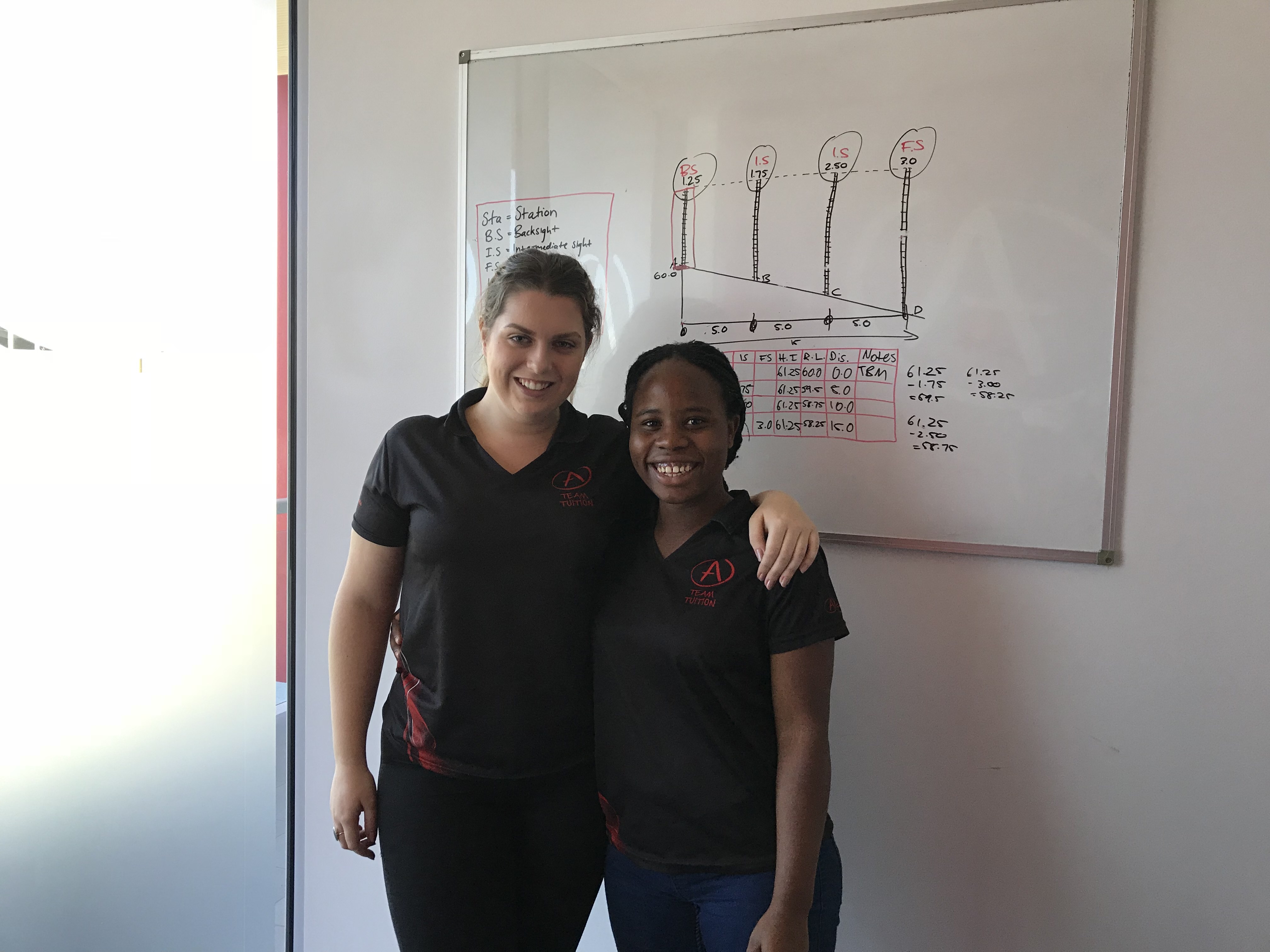
In just one term, Sarive jumped from C’s to B’s and only just fell short of receiving an A in English! Considering it can often take years to instil effective writing skills in students, Katie was immensely proud.
IMG_3570 (1)

“This was a huge transformation for her as it made her believe she could not only achieve a B, but has the potential to become an A level student! Sarive became extremely self-motivated and dedicated herself to completing all her schoolwork every week. Her conscientious attitude allowed her to hand in her work on time, increasing her confidence with each completed assignment.”

Katie, like Lexie, wanted to be someone who could add diversity to Sarive’s support network. In this regard, Katie claims her focus was on encouragement and building trust, instead of merely giving Sarive instructions.

“I was someone who was there to support her, not only in sessions but throughout the week via email and text. I became someone she could rely upon and trust, and from there I was able to encourage and motivate her to do her best”

So, What’s next?

For the last session of term two, the girls sat down with their academic personal trainers to reflect on their progress over the course of ten weeks and formulate process goals for the following semester. Aiming high is clearly no overstretch for these girls, with Esther hoping to maintain her current grades and achieve a golden palm (straight A’s in all of her subjects) and Sarive hoping to achieve an A in any one of her subjects! The girls have even written out a step-by-step plan for the following term to keep themselves accountable – something we bet every parent of teenagers can only dream of!

With Katie’s graduation soon looming she has recently passed on the reigns to Makaela Fehlhaber a specialist English tutor whom is currently studying a Bachelor of Laws/Bachelor of International Relations. Sarive is excited to be starting with Makaela, whom she knows will be able to assist her with her goal of achieving straight A’s in Legal Studies next term for her Independent Research Project! Inspired by Katie, who studies a Bachelor of Criminology and Criminal Justice, Sarive now wishes to enrol in a criminology degree. She will be working on her university applications during the upcoming term. Lexie will continue working with Esther, a year 9 student, who has already started planning for life after senior schooling. Esther dreams of studying a Bachelor of Laws and specialising in Human Rights Law – making Lexie an even more perfect match!

From our perspective, above and beyond school grades, perhaps the most admirable advances for Esther and Sarive thus far is their character development. Their fixed negative mindset’s – nowhere to be seen. The girls are now radiating confidence and positivity. Their energy emanates as soon as you walk into a room, and their smiles are a testament to the fact that hard work can be fun, especially when you reap the rewards!

Stayed tuned for periodic updates on the girls’ transformation into next term. Gold Coasters: keep your eyes peeled on our Facebook, Instagram, and website for the next Project Limitless instalment…you won’t want to miss this opportunity.

The post Two Brisbane Girls Achieve The Impossible In One Term appeared first on A Team Tuition.


from A Team Tuition https://ift.tt/2LscQI4
via IFTTT

Monday, July 23, 2018

How to Get an A in Physical Education (PE)


Speaking from experience, Physical Education (‘PE’) is one of the more challenging subjects at school. Cue everyone screaming “How?!” The answer is simple; PE doesn’t merely require academic awareness, but also peak physical performance.


PE is not a subject where you can lock yourself in your room and study for hours on end. Most schools allocate not 10, or 20% to the physical aspect of this subject, but 50%!  So, some simple advice to start of this blog: be prepared to become both physically and mentally fit to find yourself excelling in PE. Lucky for you, we’ve got a few tips to cover on how to master both elements in your next PE assessment! Exercise – it focuses your mind, makes you feel accomplished and is needed to perform sports at a high level.

Step 1: Exercise – it focuses your mind, makes you feel accomplished and is necessary to perform sports at a high level.

Doing physical exercise is probably the best place to start for many, many, many reasons. It circulates nutrient-rich blood around your body, gives you a sense of accomplishment and increases your lifespan, bone density and cardiovascular strength (all important things).  Exercising in every sense (running, weightlifting, swimming etc.) is going to make you feel more relaxed. Your brain secretes good neurotransmitters for an ‘exercise well-done’ which in turn, positively affects your brain’s functioning capacities and gets your body into tip-top shape to allow for the upcoming sports of the year.


"That’s easier said than done. When am I meant to do this? Sure, it makes sense to exercise but I don’t have time because I’m too busy studying after school, or I’m just too tired after school!"


Set your alarm for 5am, get out of bed, have a glass of water to kick-start your metabolism and start pacing around the house to wake up. Have your workout completed and be back at home by 7am to make your breakfast, (that way you can ease into the rest of the morning knowing that you are already making a head start to your day while most others are still fast asleep!).  As a fun side note - exercising in the morning helps you contain your emotions and so little pesky things that may annoy you throughout the day, won’t be as much of a worry. That extra serotonin release works wonders.

STEP 2: EAT NUTRITIOUS MEALS.

Food is fuel, you get picky about what you put in the tank, your engine is gonna die” - Ratatouille.

The main point of this step is to make sure that you eat!  Skipping a meal because you’re too lazy to make it isn’t doing yourself any favours.  But more importantly, make sure you eat good foods. Unsure if a certain meal is good for you? Google its nutritional value.

Now why exactly are we eating wholesome foods?  Eating wholesome foods provides nutrients for your body to grow with all that exercise you’ve hopefully been doing in Step 1.  But academically, it’s providing fuel for your brain which enables it to think at a higher level and for longer periods of time thereby, increasing the efficiency of your study time.  Eating healthily is not only about building your physique to master the sports you’re going to be playing all year, but also about increasing your baseline academic alertness every day.

drink-drinks-food-fruit-Favim.com-2513084

Step 3: Practice the sports you must learn – how else will you become good at them?

Aww man we have to do swing dance? Why can’t we do regular sports like basketball or touch football…


In every subject that you do, there’s going to be one particular course that you’re dreading – PE is no different. Not wanting to do swing dance? That’s probably the case for everyone, so take it in your stride. Get ahead of the pack and pick your swing dance partner in advance (find someone you know is trying to achieve that same ‘A’ as you).


Now it’s time to turn to YouTube and stream that sport until you are swing dancing in your sleep.  Start your day with 20 minutes of YouTube tutorials on swing dance techniques. No one else will know…


Is your sport not swing dancing? Is it something like surfing?  Rent a board, borrow a board, purchase a board - it doesn’t matter. Grab yourself aboard and to the beach you go. Practice on the sand before you hit the waves.  Whatever the sport, volleyball, soccer, touch football just get yourself out there and practice at least twice a week if you can.


If you don’t practice, then that’s you flushing half of your mark right down the toilet.  You can study as hard as you want but it will mean nothing if you can’t perform well when partaking in the sport.  Now that you’re physically fit and healthy, you have to remember the relevant academic skills to get you that ‘A’.


Step 4: Talk to your teacher and be specific.

In my experience, Physical Education assignments are very finicky, and that’s usually because your teacher has an idea that they clearly want you to express.  When I was in high school, I remember a really smart student receiving a B on an assignment because it wasn’t quite what the teacher wanted. You’re going to want to roll with the punches, and how do we do that? By talking to the one from whom the punches fly, the teacher!


I spent many Wednesday afternoons hanging back in the PE staff rooms with my task sheet, laptop, assignment, and questions all primed and ready to go for my teacher.  You have to be specific at this stage, you can’t just be like “so uhhh, what do you think?” A teacher will be less inclined to assist when they think you want them to check everything without having done anything yourself. It’s best to convey precisely what you’re struggling with.

how-tutoring-works photo-6

For example:


So in paragraph 2 I’m trying to convey that aerobic exercise has a causal effect on the increased elasticity in veins and arteries, do you think my evidence and phrasing of this idea is fluent enough?”


This question does a few things. Firstly, it shows the teacher you actually care about your assessment. This in turn, may change and pre-conception they may already have of you. Secondly, it narrows the teacher’s thinking to address that specific concern, which means they are more likely to give you good, direct and positive feedback.


If you just hand them 500 words and you say, “So…waddaya think?”  Their interest diminishes because you’re giving them too many examples to comment on which may accidentally put them in a position where they just want to hurry up and get you out of there as quickly as possible.


Make sure you’re doing all of this before everyone else.  About three days before the assessment is due, everyone is doing this to one degree or another and it just fatigues the teachers’ helping powers.


Step 5: Make sure all your references are authoritative journal articles or books – PE has some heavy science aspects, so you want strong sources!

Ask yourself - Where are you getting your references from for your assignments?  If you say google.com, I’m afraid you don’t have the right answer…and you’re missing out.  The theoretical side of Physical Education focuses heavily on: health, biomechanics and social science. To be able to proficiently discuss these topics,  you need to make sure that your references are 100% scientific!


Well, where do I find sources then?”


Don’t worry I’ve got your back. You’ll destroy the competition when you wield the mighty sword that is: Google Scholar.  Open up your browser to just regular, inferior Google and type in ‘Google Scholar.’ Google Scholar is a database purely for scholarly literature. It contains frequently cited articles from experts of all fields.


Find key scholarly articles by typing in key words relevant to your assignment in the search bar, (words like “Anaerobic exercise” “Cognitive development” etc) read the abstract of the articles, determine if it’s relevant and then add it to a blank document to track your research (otherwise termed your document of treasures).


Academic references are worth their weight in gold, you will use them in university, so get used to using them now. Your teacher will be impressed and it boasts all kinds of points in your knowledge and understanding.  Just make sure when citing those articles (by clicking the citation commas underneath each link) that you make sure they are always relevant to your assignment!


Step 6: Use PE specific language – Knowledge and Understanding!

Do you feel like sometimes you’re writing an English assessment instead of a Physical Education one?  Occasionally, I would neglect using course specific words because A) there were so many of them, and B) I would forget what they mean.  Teachers love when students use course specific words because it demonstrates an application of the knowledge that they have been taught (when you use them appropriately, obviously).  So, whilst sitting in class, try to nab and create a list of course specific words.


Now for you visual learners out there, this one is for you.  When you hear a word in class that you would never use outside of the classroom, that’s when your spidey-sense should tingle.  Write the word in the back of your book, and either write a REALLY simplified definition, or draw a small thumbnail picture that represents the word so you know if you should use it in an upcoming assignment.


For example, consider the word ‘Anaerobic.’ Draw a picture of a stick man running really fast!  What about ‘Adenosine Tri-phosphate’? Try drawing a lightning bolt, or an explosion.  Accumulate 30 of these, then when the time comes for you to write your assessment, you’ve already established a mental connection to that word by trying to summarise it with a picture,.  If you have 30 applicable and well-placed course words in your assignment, you are going to sky rocket ahead of everyone else and the teacher will know that you’ve listened!


Step 7: Writing an assignment is just like exercising – Treat it like a workout!

When lifting weights, you usually go hard for a set and then take a break, and then go hard again and repeat that process until the muscle is worn out.  When you’re writing your assignment treat each draft like a set.  If you only do one set at the gym, you’re either A) Not doing much work, or B) putting way too much stress on your body all at one time.  If you think about it from the perspective that each attempt at an assignment draft is a session, you have to do at least three drafts (sets) before you can even think about getting that A (or building that muscle).


Like setting out your training routine, create a skeleton with all your ideas laid out in a flowing order and then refine, refine and refine again. Make sure everything is EXACTLY as you want it to be articulated, nothing less – just like an exercise program.  You’re aiming for fluent writing that anyone could read and understand.  Being concise and articulate is where you get those sweet communication marks.  To help you do this, make sure you write a sentence or two that describes EXACTLY what you want your assignment to convey.  For example, at the start of your assignment you may write, “This report aims to reveal specific academic barriers with school students in relation to Maslow’s hierarchy of needs.” Having something like this at the top of your document keeps your writing focused, and each draft on task.


Once you’ve made your three sets (drafts), you can then hand in your full draft to the teacher for them to provide written feedback.  Having a teacher there to help is like having a spotter while you’re doing a squat: they want you to succeed so they help give you important feedback to correct your overall form (assignment) and can help strengthen your assignment to that ‘A’ standard, or at least, push you over the line to get an A.  Exercising can be fatiguing, but writing assessments also causes mental fatigue. Treat your assignment like an exercise regime and it could work wonders on your work ethic!


Now it’s time to act!  Get your mind and body ready, put in that hard work and soar to all kinds of height. That ‘A’ is calling your name and you are fully capable of getting it, so what are you waiting for?  Go and grab it, and watch your mental and physically capacities increase as a result!

The post How to Get an A in Physical Education (PE) appeared first on A Team Tuition.


from A Team Tuition https://ift.tt/2Ac2qqu
via IFTTT

Tuesday, June 12, 2018

Failing Year 11 student perfects problem-solving skills and receives a B+


Understanding the fundamentals of a particular subject is crucial to be able to comprehend extended topics and to be able to transition smoothly into different year levels.

Take Maths for example. All units are intrinsically interlinked. Without a basic understanding of algebra, how does one understand linear equations or be able to complete extended material taught in following year levels?

For student Zachary Green, this was exactly his dilemma. He lacked the fundamental skills that would allow him to excel on problem solving questions which prevented him from being able to achieve a grade above a D.

After failing his Year 10 Maths exam, Zac’s Mum Kim decided tutoring was the best option to help Zac with his struggles prior to his senior years.

I googled ‘tutors like most people do, and there were quite a few to choose from. I did review searches and every review for A Team came up positively. I also liked what some of the reviews said. Apart from being academically strong, A Team had good interpersonal relationships with their students. Knowing Zachary as he is, being a little bit shy, I thought that this company would help.”

Zac was paired with our stellar Service Delivery Manager and experienced Academic Personal Trainer, Sam Adnett, to kick-start his transformation. After a few sessions with Zac, Sam was able to identify exactly what was stopping him from grasping those extra marks.

“When I first met Zac, I could see that he didn’t have any trouble understanding new mathematical concepts, but he kept getting things wrong because he lacked some fundamental skills. He could read a problem-solving question, understand what it was asking, but when it came to the working out, he was making errors.”

Sam jumped straight into filling the gaps in Zac’s knowledge and how to structure exam answers.

“We initially spent a lot of our time going over things like operations on fractions and solving for x; really getting to the basics of algebra.”

Once Zac started to revise and conquer these topics, Sam noticed a fast improvement.

“All of a sudden he started to get the answers that he struggled to answer before and apply his knowledge to almost every topic from then on. This really boosted his confidence and before I knew it, he was the one reminding me to give him homework!”

After a few week’s Kim also started to see changes in Zac and saw him adjust to the additional work.

“I think it was probably after the first couple of weeks when initially Zachary had to get used to the increased workload and the actual commitment of sitting down and doing 2 hours of maths and actually paying attention.”

Sam contributes a large portion of this rapid transformation to A Team’s Creating ‘A’ Student’s (CAS) program.

“Zachary stuck to the Creating ‘A’ Students Program religiously and it really worked for him. It taught him the habits of paying attention in class, taking good notes, and of course practice, practice, practice.”

By following the CAS program, Sam wasn’t just able to fill the gaps in Zac’s knowledge – she was also able to help Zac develop a growth mindset and open his eyes to the factors that students don’t consider when asking themselves why they’re failing at school; time management, assessment strategy, and effective note-taking during class.

Not only did this dream team stick to the CAS program and a personalised study plan for Zac, they also focused on ensuring Zac was retaining the information taught within sessions.

Reviewing the content and presenting it in different formats were just some ways in which Sam helped Zac remember the process to follow when answering exam questions.

Sam diversified how the content was delivered within each session and opted to show Zac educational YouTube videos which explained mathematical concepts in order to see which methods aligned with his visual learning language the best.

“I made many suggestions to broaden Zac’s study strategies to make it more interesting for him, such as exploring what YouTube has to offer education-wise.”

The pair also ensured that whilst Zac progressed forward each week, he was reviewing questions at the same time. Following sessions, Zac would independently choose a few random questions from chapters within his textbook that he’d already covered in class and re-do them for homework. This helped him to have a more developed understanding of the topics. Sam found that this strategy had an accumulative effect and helped Zac immensely during exam time.

“This strategy really helped Zac to understand the topics and retain the information, so when it came to exam time, there was no stressful revision because he already knew the content inside out!

What worked here, and allowed Zac to receive a B+ within one term of tutoring was distributed practice. Rather than trying to compartmentalise information into Zac’s brain right before his exam and simply cram the content, the extended process of reviewing notes throughout the term and learning at a steady place worked wonders for Zac and helping him achieve this magnificent result in the end.

Not only has Sam identified improvements in Zac’s academics, but also his beliefs in himself, his abilities and his confidence.

“Zac was quite shy when we first met. I remember he always quietly gave one worded answers to things and it took a lot of questioning to find out anything useful. Now, I can walk in and say hello and he greets me confidently, before sitting down and telling me everything about his week. Before I started sessions with Zac, he also didn’t really have much of a study routine. Now, he can address every aspect of his study routine without prompting. He knows exactly what he needs to do, and he just does it.”

Sam isn’t the only person to notice this shift in attitude with Zac himself reflecting on how tutoring has changed his perception.

“I feel more determined to do well than I did before.”

Kim couldn’t be happier with Zac’s transformation and the support provided by A Team.

“He doesn’t argue about maths. I used to try to help Zachary a lot but I’m not a teacher or a tutor. I would get frustrated and I think he got frustrated because I was getting frustrated. So, to take me out of the whole process and just have someone neutral, it just made both our lives a lot easier and our relationship. He now knows he has someone else that he can depend on to help him with his maths.”

The post Failing Year 11 student perfects problem-solving skills and receives a B+ appeared first on A Team Tuition.


from A Team Tuition https://ift.tt/2t4SRDk
via IFTTT

Thursday, March 15, 2018

How To Deal With Exam Stress


For those of you currently in high school, you will definitely experience the dread ‘exam block’ period, wherein you undertake a series of exams for some, if not most, of your subjects. Whilst it’s a common belief that it is normal for students to experience stress during exam periods – especially since it’s such a significant and sudden increase from your typical classes! – it doesn’t mean that that stress should be debilitating and overwhelming.


Academically, exam stress is defined as a “common physiological condition… in which individuals suffer from intense worry and discomfort during the exam period”. Being apprehensive about exams is completely normal, since it helps raise your focus levels (both physically and mentally) and stops you from becoming complacent about your learning.


However, that can turn ugly fast if you are overly stressed and worried about the outcome of the exam, or find little to no relief in completing it – especially if it is to the point that you count yourself as a failure before the exam even begins. Too often I’ve seen this in my students, and it honestly breaks my heart.


The great news is, however, that there are practical things you can do to improve how you handle your stress, and prevent it from becoming as serious as chronic performance anxiety. In this blog, I’ll be going through a few techniques that you can use to help yourself out of stress, and into a healthy, functional mindset.


1. Study healthily


The foundation of a healthy study cycle is the maintenance of a healthy body.


Think of your body and mind as a delicately balanced set of scales. The connection between the two is incredibly powerful, with balance resulting in extreme resilience; likewise, when they are out of balance with each other, you may experience immense disharmony in your life.


Our brain perceives all the sensations that our body’s receptors deliver – so, if we don’t look after ourselves through adequate nutrition and exercise, we may feel sluggish, lethargic, anxious, and even depressed. Exercise however has been proven to increase your attention span, boost your decision making skills, and improve your memory.


Similarly to how our body affects our mind, the opposite also occurs. If our brain is overly stressed or anxious, it may create responses in our body to convince us that we are in danger (for example, a heightened heart rate, sweating, or increased sensitivity). This can lead us to avoiding our tasks or, if left for too long, our immune system can become depleted, leaving us at the mercy of frequent illness, thereby reducing our ability to complete higher order thinking.


Keeping this balance is paramount, especially during exam season. While you may be tempted to stay inside and cram all day, it’s actually important for you to get outside and be active. Go for a run, or even a walk, do some yoga, play some footy or soccer with your friends, or sign up to a recreational sports team that competes every week. Make sure that you have three meals a day, and that you are actively incorporating fresh ingredients into your food – particularly fruits and vegetables, red meats, and one or two forms of grain.


2. Plan in advance


One of the greatest arts you can master in life is the art of preparation and organization.


Many of the things that stress us out during the week take up space in our brain simply because we decide to store it there, rather than dedicating specific, purposefully planned time and effort to it.


To combat that, I would recommend proactively planning various elements at a consistent time and rate. This can range from picking out your clothes to wear to the exam on the day before (or, if you have a uniform, picking out a special item to take in your pocket, like a lucky bracelet or a special exam pen), making your food in advance, or writing down anything you have to do the morning of the exam so you don’t scurry around last minute, trying to remember if you’ve forgotten anything!


This reduces something that people refer to as ‘decision fatigue’.  We make so many decisions every single day, and if we are focusing too much on decisions that have little impact on our lives, we are unable to muster the attention and effort to focus on the important ones.  Often these people feel the pressure of an important decision but can’t think enough to make it properly, and end up with a ‘this will do’ attitude, not something you want when it comes to performance time!


Of course, it would also be incredibly useful for you to plan out your week, and any major details, study times, or important notes in regards to the exams and assessments you have ahead of you. Strange and silly as it may sound, taking the time to plan gives you exponentially more time to execute and will actually take a ginormous load off your shoulders!


3. Utilise your support networks


This is another tip that will be useful mostly in advance of your exams, but can also be utilized during exam block itself. Make sure that before you undertake any assessment that you actively use the support networks that are available to you!


Teachers will be your one-stop source for revision sheets of exam content, as well as advice resources. After having taught you for however long in the year, your teacher will be very aware of your strengths and weaknesses alike; it is your responsibility to meet up with them and ask for any advice from them as to how you can improve and smash your exams.


Likewise, your parents and guardians will be keenly aware of what your possible strengths and weaknesses are – but most importantly, your parents will be able to keep you accountable to the work you need to do. I would recommend making your proposed study schedule public in your home, and encouraging your parents to check if you’re on track. Even better, with a little communication, you can express to them how you would best feel comfortable and supported in the time leading up to your exam, and they will hopefully be able to accommodate for you!


Parents and guardians, if you’re reading this, make sure you yourself stay proactive in your support of your children! If you would like help in that area, make sure to check out our blogs regarding our top parenting tips, and look out for our parenting eBook coming out soon.


The last piece of your support crew we believe should be your Academic Personal Trainer! Not only are they great mentors and motivators (not to mention incredibly intelligent and knowledgeable), but our tutors are also most often University students themselves, and constantly take exams! Being such high achievers, they will all too often have their own exam stress tips up their sleeves, and will be ready to share them with you whenever you need it.

4. Configure your coping mechanisms


Now, let’s chat about the actual experience in your exam. You may have prepared perfectly, had a great healthy breakfast and a good morning run, and your teachers and family would have encouraged you every step of the way – yet, you can still be sitting in the exam, and feel a giant hole beginning to form in the pit of your stomach.


This is where your coping mechanisms should come in.


Coping mechanisms are small but deadly, and they attack your exam stress directly by helping calm you down into a focused mindset. Here are a few examples of some useful coping mechanisms to use when you start feeling anxious or stressed during an exam:


  • Positive reframing: Essentially, take a negative thought captive, and shift your focus onto something positive. You may think that just because you can’t find the answer to a Maths question, you’re a failure; but you may be able to focus instead on the fact that you’re able to still construct the method properly, or that you can complete a whole other set of questions with ease.
  • Breathing and visualisation: While it may feel like the pressure is on in regards to how you spend your time, if you are struggling to stay calm in an exam, it is in your best interest to take a few moments out to breathe. Close your eyes, focus on breathing in and out deeply, and picture something you find calming and relaxing – or focus on something you’re looking forward to. I know, I know, it sounds like a weird thing to do – but trust me. It actually, genuinely helps.


5. Don’t sweat the small stuff


Like I mentioned in regards to positive reframing, it is absolutely necessary for you to take negative thoughts captive – and in an exam, where the pressure can be intense simply because of your environment, it is very easy to turn a small detail into a giant life-crushing problem.


Firstly, you have to realise that the stress you’re experiencing is actually an overblown version of something that is, essentially, a natural feeling. Stress is actually your body’s way of helping you meet the demands of your task by increasing your mental and physical focus levels, helping you run at top speed. Recognizing this, instead of deeming yourself incapable, will stop you from freaking out at the first sign of stress, and push you towards managing it properly.


After realizing that, you must tell your brain the absolute truth that is in front of you. This means looking at the test’s contents, and focusing on what you do know, instead of what you don’t. It means looking at giant questions and highlighting the small parts that you do understand, and working on understanding them together as a whole – rather than writing it off as “too much of a mess” or “something we didn’t get taught”.


Most importantly, the greatest stress relief comes in constantly reminding yourself that you are not the mark that you receive from an exam. All too often I hear students say that they have to get a certain mark, or else their futures will be on the line – they won’t get into their chosen university, or a specific program, or achieve anything with their lives.


That is not true, and it never will be true.


You are so, so much more than simply a result on a paper, and you will accomplish things far beyond the reaches of school! Our responsibility as educators is to assist in being your best self, yes, and helping you achieve to the best of your ability; however, very little elements of this life are permanent or life-changing, especially when it comes to subject exams!


6. Destress with a debrief


Finally, once the exam is over and everything is done, you can relieve any left over anxiety or stress over your results by performing a personal debrief. This can be done either with a close, trustworthy, and encouraging friend or family member, or it can be done all by yourself!


The idea is to actually set aside time after the exam to write down your original intentions and goals going into the exam, followed by your thoughts and experiences during it, and then finishing with how you feel afterwards.


It is important that you don’t just focus on the negative, but that you are specific in focusing on the positive, and shaping the rest as constructive feedback for your next exam (either in that subject, or in a different one!). Write about what you were proud of, what elements surprised you, and what you believe you could do better.


Doing that for each of your exams will actually develop a skill that you will take with you all your life: self-reflection. Whether you realise it or not, self-reflection will, with time, help relieve you of many anxieties and worries, specifically because it provides a positive outlook on both your strengths and your shortcomings. When you know your strengths, you are able to celebrate them consistently, especially when anxiety starts to attack you; and when you are aware of your shortcomings, you can work towards improving them over time, thereby eventually turning them into strengths.


Doing this consistently, and encompassing the other elements outlined above, will set you on the right path towards a healthy, happy mindset – not just during exams, but in any stressful situation in life.


The post How To Deal With Exam Stress appeared first on A Team Tuition.


from A Team Tuition http://ift.tt/2pdo3OL
via IFTTT

Sunday, March 4, 2018

Success Spotlight: Brittany McEvoy and Ethan Reiser


Often, people can underestimate the impact that a boost of confidence can have on a person – especially if that person is a young student who is finding their footing in the world. For A Team Tuition, building a student’s confidence is intrinsic to creating transformation in their lives and academic careers.


When hiring our tutors, we focus specifically on their mentoring and motivational abilities for this very reason, rather than merely focusing on their content knowledge. This means that we can guarantee that every student will feel supported, motivated towards their goals, and will experience exciting new learning experiences that are positive and fulfilling.


Brittany McEvoy, one of our incredible tutors, was highly focused on these exact things when it came to tutoring her Year 8 student Ethan Reiser. Ethan was on straight B’s for all of his subjects, but his mother Sharon knew that he could achieve even more.


Like so many students before him, Ethan was an incredibly talented young man, who had everything he needed to accomplish wondrous things – except the ability to see that his own potential.


“Ethan couldn’t see what I could see – that he had the ability to understand content that is not only on his learning level, but also way beyond him!” Brittany commented. “So my focus was to help him that he actually did understand what he was doing, and developing a friendship that allowed him to feel comfortable and supported.”


“However, I was also very focused on becoming like a ‘sister’ figure to him, so that he would respect what I had to say – especially when we had to have those honest conversations about his effort and motivation. I think doing that, especially near the start of tutoring, really helped us establish the right expectations, and lit that fire of motivation under him for the rest of the year!”


Gold Coast skyline


The first step towards lighting that fire was shifting Ethan’s learning environment from a typical seat and desk into an atmosphere that was fun and exciting for him. To do this, they sat down in beanbags; from there, Britt focused on making Ethan’s learning experience fun.


They used a whiteboard to create visual representations and explanations of Ethan’s work, and had multiple debates about science and its elements. These debates were a great tester of Ethan’s science skills, as it pressed him to go beyond simply recounting information, and towards developing a solid understanding of content and all it entailed.


“As with most Year 8 students, motivation was definitely hard for Ethan to maintain at times – which is totally normal, and had to be accepted for transformation to take place!” Britt remarked. “I accommodated for this, by ensuring that each session was inviting and fun for Ethan, rather than simply sitting down and doing work in a way that was boring to him.”


Doing Ethan’s work in such a way not only allowed him to boost from straight B’s to primarily A grades, but also helped him achieve the Principal’s Academic Award! Most importantly, Ethan was now aware of his true abilities, and that itself unlocked countless opportunities for him.


“I remember Ethan talking about how he couldn’t decide if he wanted to be a doctor or a lawyer, and I reminded him that if he really wanted to, he could be both!” Britt recalled.


“He now knows that school doesn’t define his future, but that he can view school as a sport that he can ‘win’ at if he ‘trains’ hard enough. I hope that in the years to come, he knows that he has the potential to be whoever he wants to be if he puts his mind to it.”


Brittany herself was incredibly proud of Ethan’s efforts, seeing a small bit of herself in her young student.


“Ethan had very similar struggles as I did in high school – you know, being the student that did incredibly well in junior school, but didn’t adapt as well as expected going into high school due to the new pressures and difficulties,” said Britt. “It was awesome to help someone like Ethan, because I know I definitely wished to have the same help – and he did so well to take it on board so quickly, in such an effective way.”


“He definitely did an incredible job, with some really great support from his friends, family, and I’m so honoured I got to play a part in that!”

The post Success Spotlight: Brittany McEvoy and Ethan Reiser appeared first on A Team Tuition.


from A Team Tuition http://ift.tt/2Fcobsp
via IFTTT