Wednesday, October 24, 2018

How To Get An A In Physics – 7 Steps

A lot of people say that it’s impossible to get an A in high school physics. This couldn’t be more wrong. Physics is a hard subject, not even the most optimistic tutor (me) would ever deny that. But if you work hard and follow these steps, you’ve got great odds of landing that fabled A.

1. Make good notes

This step is a pretty good start for any subject, but it’s particularly important for physics. Physics classes can be pretty intense, and it’s easy to end up blankly staring into space while the equations roll around you.

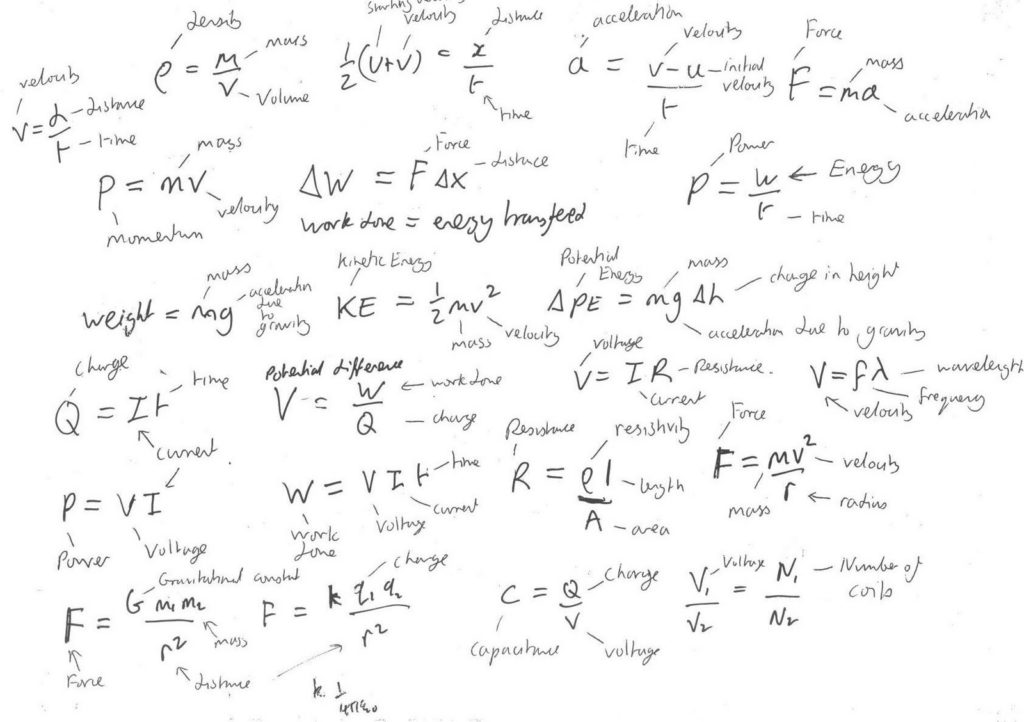
That’s obviously not the best situation, but it can be hard to avoid once the teacher really hits their kinematic-equation-stride. However, if you get the key points written down, you’ll be able to come back later and work through it at your own pace. In particular, if your teacher writes an equation on the board, get that written down, it is DEFINITELY important. Make sure you write down what they stand for too, so you don’t end up with a “Where did that C come from? What does that even mean?” kind of situation. Ideally, you’re getting everything important your teacher says written down, but if you get these key points, you’ll be able to come back and figure it out later.

2. Understand your formulae

Tutor helping student with Physics

The next step is figuring out how your formulae work. Get used to breaking apart your equations, figuring out how the different pieces work together, and working out what units your answer is going to have.

Familiarise yourself with different ways the formula is commonly rearranged, and other formulae that tend to link in with it. For example, if you’re working with the equation for friction (frictional force is equal to the coefficient of friction times the normal force), then practice rearranging that equation a few different ways, so you’re used to it in all its common forms.

This is an equation for a force, so other equations that use force (like F=ma, for example) might be useful things to be able to substitute in. If you can do this step, then the next one will become much easier.

3. Practice using them. A lot.

It’s pretty much exactly the way it sounds, but it’s really worth emphasising. If you don’t practice using the equations you’ve been given, over and over again till you cringe at the very mention of the word “friction,” you won’t get an A for physics. It’s as simple as that.

Do the problem questions your teacher hands out as homework. Find more in your textbook and do them too. Check your answers and make sure you’re doing them right. If you can do that, then congratulations, you’re already most of the way to getting that A. There’s still a few more tips and tricks that’ll help you along the way though.

4. Look for “reasonable” numbers

Physics is an easy subject to make lots of little errors in, and those silly mistakes really start to add up when they’re costing you a mark or so at a time. Because you probably won’t have time in an exam to check your work as rigorously as normal, the best way to avoid them is to know what sort of answers you expect for these sorts of questions.

If you’re doing a friction question, and your calculator tells you that the object will be experiencing 758, 437N of frictional force,  you should probably take a step back and go “huh, that’s really, really high.” Generally, your answers for certain types of questions are all going to fall within a certain range, and anything outside that is a clue that something’s gone wrong.

If you’ve done a hundred friction questions, and gotten answers between about 2N and 15N every time, then when you see that crazily big (or small) answer come up in the exam, you know something has gone wrong. As a result, you can go back and check, and figure out that you’ve divided the normal force by the coefficient of friction instead of multiplying it, or whatever silly little error you’ve made. Sometimes, there won’t be an error, but it’s definitely a clue that you should go back and check.

5. Start EEI’s early
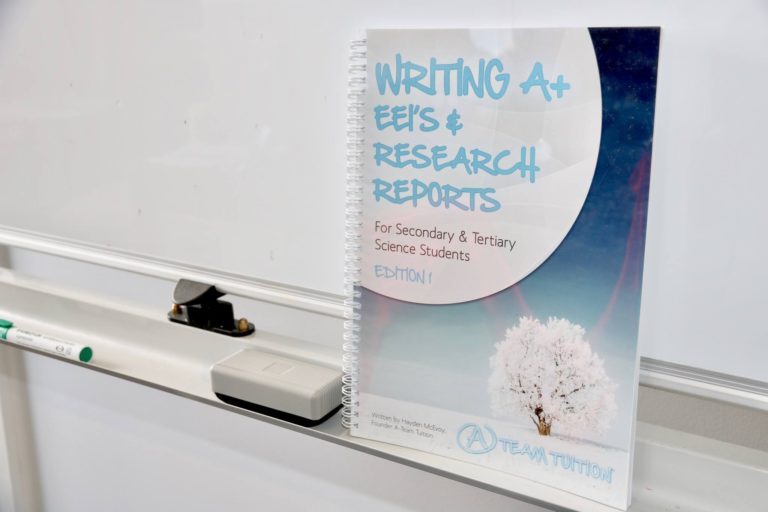
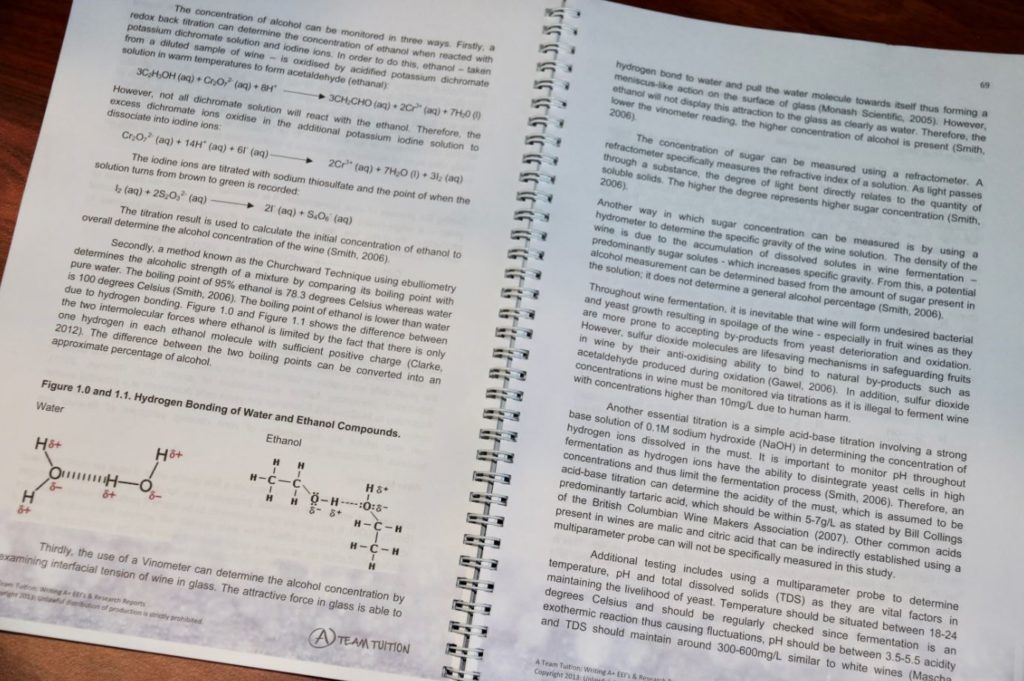
EEI Manuel

EEI stands for Extended Experimental Investigation, or Early… Okay, I can’t think of a second “E” word there, but you get the point. You really can’t start an EEI the night before.

To be honest, starting even a week before is crazy brave. Between the testing and the research, these things are months of work, and you should plan accordingly. If you start the second your teacher hands them out, you’ll be fine.

If you leave them till the last minute, they will become the hell that everyone says they are. Also, if you’re struggling, We have an EEI manual that can be a great investment, available here!

6. Do your research before you test

This one kind of goes hand in hand with the last one, but it makes a big enough difference to get its own heading. At the end of the day, there’s a certain amount of research into the topic you’re doing your EEI on that you’ll have to have done before you can write the final report.

The choice is up to you about whether you do that before you gather your data, or after. However, it’s really worth getting in early and getting this done before you test, because it will make your job a heap easier. Not only will it mean you actually know what you’re looking for when you’re gathering data, you’ll often find helpful tips online when you’re researching that will help you refine your experiment.

Plus, it means less for you to do at the end, when you’re busy tearing your hair out writing the report on your findings, so it’s a win-win.

7. Make a formula sheet, then ignore it

The last step should be done either throughout the term, or when you’re revising for your exam. Either way, it’s really important. Gather up all the formulae you’ve used throughout the term, write down what all the variables mean, and put this all onto one A4 page (they should probably fit, go double-sided if you have to).

You can use this for the start of your revision. Then, once you’re starting to get a handle on the topics you’re covering, try and use it less and less. Even if you know you’ll get a formula sheet in the exam, it’s worthwhile weaning yourself off it if you can. Otherwise, in the exam, you’ll waste heaps of time flicking back to look at the piece of paper with all the tiny little equations on it.

If you can get to the stage where you’re not relying on it, then you know that you’ve got those equations in your head, and you’re ready to rock this exam.

7.5. Don’t freak out!

Physics is hard, but people pass it all the time, and yes, people even get A’s. Follow these steps, and you will be one of them. Good luck!

The post How To Get An A In Physics – 7 Steps appeared first on A Team Tuition.


from A Team Tuition https://ift.tt/2q8zUhZ
via IFTTT

Tuesday, October 9, 2018

How To Get An A In Economics – 7 Steps

Economics, as you may know, can be a pretty weird subject.

After all, there aren’t many high school subjects that juggle mathematics with essays, hand-drawn graphs and a decent amount of educated guessing to produce crazy conclusions like why milk costs the Government millions of dollars every year.

If you’re struggling to figure out how you’re meant to get an ‘A’ in a subject which comes across as pretty darn strange, then you’ve come to the right place!

True, Economics might not seem like your other subjects – but just like you get guidelines in English and formulae in Mathematics, there is indeed a set of strategies and measures you can undertake in order to improve your grade.  It’s worth noting, too, that these are the very same steps which I still use as an Economics Major at Bond University – no short-term tricks here, just proper strategies!

So, let’s begin!

1. Translate the Task Sheet into a Plan

It often seems like Economics task sheets are written in a different language; if we are able to translate all of this business jargon into plain old English, we stand a much greater chance of answering the task succinctly and effectively.

It’s easy to freak out when the task sheet outlines the topics that are required in your assessment piece.  But hidden in all of these confusing words is something super useful; an assignment plan!

By categorising the types of topics that you are required to address in the essay, the task sheet has inadvertently given you a ready-to-go outline for your essay structure.  Less work for you!  Choose which topics are similar, pop your now-grouped-together topics into separate paragraphs, add a cute introduction and conclusion and boom – plan complete!

For example, consider an instance where the terms GDP, inflation, demographics, target-market, and supply-demand graphs were all mentioned in a task sheet which asked you to explain how the rapidly increasing output of goods and services within Australia will affect overall prices in a certain market.

You would first group together your like terms.  Inflation rises because of GDP.  Target-markets are a part of a demographic.  And supply-demand graphs work with the law of supply and demand to demonstrate how prices will change in a certain market.

Then, you would use these groups of terms to create a body paragraph for each one which contributes towards your argument.  An example of an Economics essay plan is shown below:

Introduction – Address task and what the essay is striving to achieve

Body Paragraph 1 – Introduce ‘inflation’ and ‘GDP’ and the impact that these factors have historically had on overall prices.

Body Paragraph 2 – Talk about what part of the demographic your target-market fits into, and thus explain how they are impacted by the previously mentioned inflation and GDP.

Body Paragraph 3 – Outline the law of supply and demand, including graphs, and visually demonstrate how the price of the product or service changed due to the rising GDP/inflation figures.

Conclusion – Summarise your findings (and provide a recommendation!)

See what I did there?  I didn’t actually create any new ideas.  I didn’t attempt to reinvent the wheel and produce the most mind-blowing piece of Economic theory ever seen.  I simply reorganised a whole heap of topics that were handed to me on the task sheet to form the outline of an essay structure.  Easy!

So, instead of putting on your I-look-okay-but-am-actually-freaking-out face when your teacher puts the task on your desk, relax!  With a little bit of reorganising, you’ll have a finished assignment plan in no time.

2. Work with the Teacher

lee at tm

Economics is similar to humanities subjects in that the marking guide is often subjective.  The result of this is that you need to work closely with your teacher to ensure that you are writing essays and answering exam questions in a style which is both factually correct and to the teacher’s liking.

What does ‘working with the teacher’ look like, though?  It looks like several different things: paying attention to the way they describe and define economics; listening carefully to how they want you to structure answers and essays; and it always involves submitting a draft where possible.

Because a lot of Economic theory is in ‘the grey’ – i.e. the answer is not absolutely clear – the manner in which you present your findings becomes critically important.

Why is it that some of the greatest economists throughout history of directly opposing opinions on certain matters?  Because plenty of Economics is not set in stone.  Plenty of Economics is, in fact, based on assumptions which can be interpreted quite varyingly, thus requiring justification and explanation.  Therefore, it is essential that you tailor your justifications and explanations to suit your teacher.

By ensuring you work cooperatively with your teacher’s preferences, you immediately stand a far greater chance of working towards that ‘A’.

3. Nail your Terms and Definitions

You’ve been studying all term.  You’re itching to get into the end-of-term exam and smash out the extended essay.  The teacher ushers the class in, you take a seat, the exam bell rings and you’re off!  You make a flying start to your extended essay – but wait!  You realise you’ve forgotten something terribly important…

Definitions!

Economics is built upon a language of confusing terms and business jargon; the importance of providing articulate and concise definitions to topics cannot be understated.  Want to talk about how employment is affecting Gross Domestic Product? Explain Gross Domestic Product to me first.  Want to discuss why inflation is good at a certain rate but not at a higher rate?  Explain inflation to me first.  Do you want to draw an elaborate set of supply-demand graphs to demonstrate the impact of negative publicity on a certain market?  Explain the law of supply and demand to me first.

Getting the picture?  Awesome.  If you can cohesively bring in succinct definitions to each of your economic terms as you write an essay or extended exam answer, your knowledge and understanding criterion is going to go through the roof!

And when criteria go through the roof, so too do our chances of getting an ‘A’.

4. Think in Real Terms

Stock-Charts-7

Thinking exclusively in Economic terms can get a bit stressful.

When we talk in Economic terms, it is highly conceptual and very abstract.  In other words, none of it actually seems to relate to anything real.

Consider this question: How will a change in consumer preference shift the demand curve?  Will this shift subsequently put upward pressure on price and generate more economic profit for the firm in the market?

Don’t worry if you’ve already zoned out.  After all, that question doesn’t actually mean anything real, does it?  It’s just a whole heap of different concepts mashed together to prove something which only someone studying Economics would be able to understand.

Instead, consider this question:  A Current Affair runs a one-hour program on the benefits of sourdough bread; they claim it will make you live longer, feel fitter, slim down and half your chance of heart-attack.  Will the sales of sourdough bread go up or down because of this? Will the profits of sourdough bread vendors go up or down because of this?

Better?  I thought so.  It is fairly logical that good publicity for sourdough bread will lead to more sales and thus more profit.  Thinking in real terms helps us give context and application to otherwise obscure concepts, thus making them far more palatable.

So, there you go; whenever faced with a dizzyingly conceptual question in that pesky Economics mid-term, try to think of it in terms which make sense to you, as opposed to relying exclusively on your understanding of Economic terms. In doing so, you’ve taken yet another step towards that ‘A’.

5. Connect the Dots – Linking Sources

Untitled-1

Economics, like a crime scene, is filled with clues.  Some of these clues are obvious, whilst others are almost invisible.  It’s time to put on your detective hats and pull out the magnifying glass; in this section of How to Get an ‘A’ we are going to be looking into how to link sources (i.e. the clues) to produce a comprehensive and complex conclusion.

When posed with a broad question in Economics – perhaps something along the lines of “How does inflation affect employment?” – you as the Economist will be required to investigate a variety of sources, each with their own opinion or facts.

Consider these opinions and facts to be a pile of scrambled jigsaw puzzle pieces.

Identifying what these opinions and facts are will get you a ‘C’.  Grouping together the pieces which look similar and show the same thing will reach a very respectable ‘B’.  But what do we do if we want to reach that coveted ‘A’?  We must strive to not only solve the puzzle in its entirety but to explain how each part of the puzzle interacts with the others.

If you’re having trouble imagining how this applies to Economics, let’s use Step 4 and think in Real Terms.

Consider the question posed before: “How does inflation affect employment?”  Now, let’s think of pocket money.

Let’s assume you receive $10 per week in pocket money.  You always spend the whole $10 on ten individual lollies, each costing $1.  It’s a lovely routine and you enjoy it very much.  Good for you. 

Unfortunately, however, the rate of inflation is rising in Australia.  The Reserve Bank of Australia, in turn, increases interest rates; in other words, how much money families and businesses have to pay back on their loans. 

What does this mean for your lollies?  It means the corner-store you buy them from has to suddenly increase the amount of interest it repays to the bank it received a loan from.  More money being spent on the loan repayments means that they need to raise prices of everything in the store in order to compensate.  To your dismay, you see the price of your $1 lollies has increased to a whopping $2. 

Shocked, you decide to never shop there again.  Your train of thought is mirrored by half of the customers who also shopped there.  And so, the number of customers that shop in that corner-store is halved. 

As a result of this, the manager of the corner-store dismisses half of his/her employees due to there being too many employees for the number of customers coming in.

Identifying that inflation will lower employment is akin to identifying what the facts of the situation are; a ‘C’, in other words.  Pointing out the how and the why – i.e. explaining that the rate of repayment affected the cost of lollies which in turn detracted from customer-numbers and thus employees – is an excellent way of reaching a ‘B’.  If we put this example in the context of an entire nation, however, we can explain that the reduced consumer spending is exactly what the Reserve Bank of Australia wanted when it raised interest rates and that this reduced spending will reduce the rate of inflation via increased unemployment and loan repayments.  Now we are well positioned to achieve an ‘A’.

Just like detectives follow clues, figuring out and explaining the complex web of Economics is akin to solving a crime.  The more clues we can prove to be correlated, the greater our chance of getting an ‘A’.

6. Don’t just Conclude – Provide Recommendations

This step is actually pretty easy.  By this stage you’ve done all the hard work.  You’ve already translated the task sheet, consulted your teacher, nailed your definitions, rethought the topic in real terms and connected the dots.

All that remains is for you to demonstrate your knowledge of Economics in one final way; by providing recommendations.

Consider this step the final few metres in a marathon.  Sure, it’s only a fraction of the total distance, but without taking this final leap the entire race has been for nothing!  Use all of the background information you have gathered, as well as the analysis provided in your essay, to craft a reasonable and insightful recommendation as to what path the relevant parties should pursue in order to maximise Economic efficiency.

So long as your recommendation is supported by evidence and Economic theory, the possibilities are limitless.  Every morsel of data and every varied opinion collated during your research process has led to you being able to provide an astute recommendation.  Back yourself!  With logical justification, you can’t go wrong

7. Find Your Passion in Economics!

harley and waide

With all of the nitty-gritties out of the way, all that remains is for you to find your passion in Economics. Don’t worry, either; Economics doesn’t have to be as boring as it sometimes comes across.  With the help of A Team’s Academic Personal Trainers, discovering a topic which is inspiring and stirs a sense of passion within you is entirely achievable.  By collaborating and brain-storming with energetic and enthusiastic tutors, you will be able to best showcase your comprehensive understanding of Economics within a topic that will motivate you to produce your finest work.

You may even be surprised where you find a passion.  After all, many things you already hold strong opinions about are, in fact, outcomes of Economic decisions.

People flood the street and holds riots when outrageous tax increases are enforced. 

Families are forced into homelessness when Social Security allowances are decreased. 

Legalising certain drugs may negatively impact our daily lives, however the Government revenue generated by regulating the sale of said drugs would create fabulous facilities for all of society to enjoy.

Cigarette sales produce millions of revenues in the form of tax but cost just as much in the form of health care.  If health care costs outweigh tax revenues, we are losing twice; with both our health and our finances.  If the revenues outweigh the costs, however, we’re essentially compromising our collective health for a bigger pay cheque. 

The complexity of Economic issues is endless.  The range of topics to address, too, is effectively limitless.

So, try not to roll your eyes when you find out what next term’s topic is.  Because hidden inside that topic is a puzzle.  A puzzle of complex, multi-dimensional Economic concepts all waiting to be discovered.  Try to dig deeper than the surface of any Economic topic and you will find a vast and fascinating network of interrelated facts, figures, graphs and opinions.  The contradictions, the corroborations, the agreements, the furious denials, the nuanced political background to Government Economics; they all weave together to create the fabric of perhaps the most stimulating and thought-provoking subject around.

What now?  It’s time to follow these 7 Steps and start working towards your ‘A’ in Economics.

There are many things in Economics that remain uncertain – one thing you can be certain of is that you won’t regret following these Steps for one minute.  Good luck!

The post How To Get An A In Economics – 7 Steps appeared first on A Team Tuition.


from A Team Tuition https://ift.tt/2NwFljS
via IFTTT

Thursday, August 30, 2018

How To Get An A In Chemistry

For students dreaming of becoming a doctor, pharmacist, engineer, concreter, painter or even a chef, you will have to be very familiar with Chemistry as it’s a subject that you will end up using on a daily basis in your chosen career. Chemistry forms the building blocks of life.  It is a subject that is traditionally viewed as difficult because of the complex nature of chemical reactions and the unfamiliarity of the new language. This is usually where students crumble in Chemistry but with the right tools you’ll be on the track to success in no time!

Chemistry is far more theoretical than most people imagine. The theory studied in Chemistry, particularly at a High School level, is the starting point to the practical work that will come as students transition into the careers that were mentioned at the start of this blog. Whenever a Doctor prescribes a drug, they will always consider the chemical properties of the drug and how it will interact with the human body. This is just one example of Chemistry in action! Through this subject you will learn how to view the world in a different light, and appreciate the complex nature of the world we live in.

So without further ado, put on your safety googles and let’s get started on how you can ace Chemistry at school!

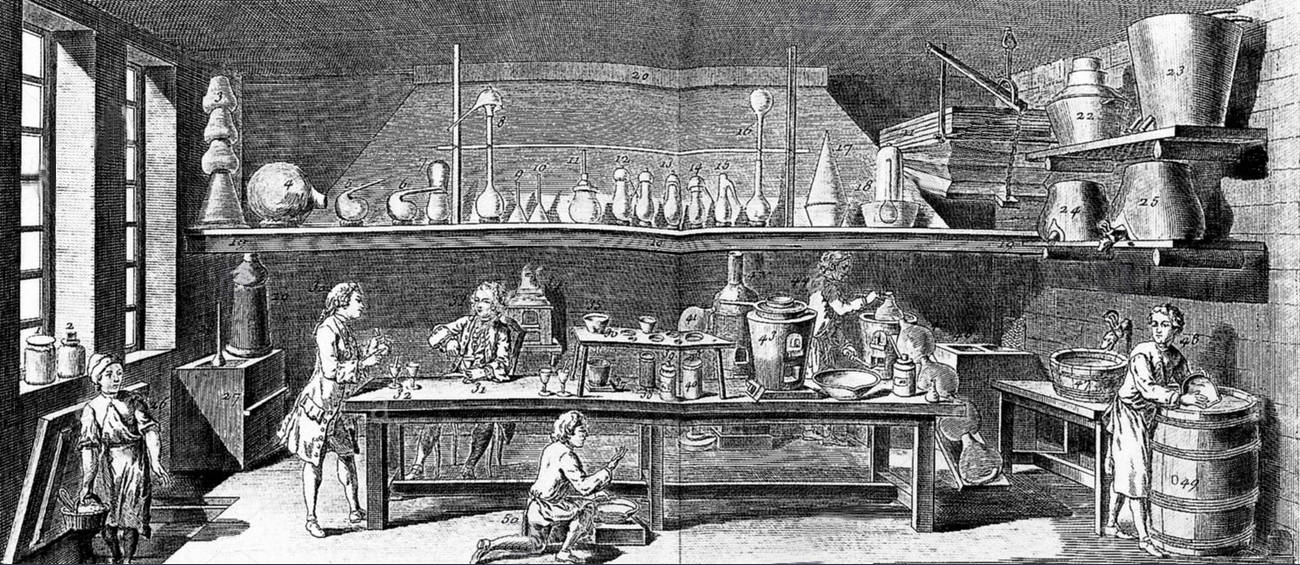
Tip 1: Know the history of Chemistry

Untitled-3

In order to grasp the theoretical concepts that are studied in Chemistry, it is important to understand the history behind them. One fundamental principle of Science is that every concept or idea that you learn is based on a ‘theory’. By a theory’s very nature, we cannot definitively say that we ‘know’ something. For example, the structure of an atom cannot be known for certain. The development of the theory on the structure of atom started in the early 1800’s by John Dalton, but it has continued to develop and change through scientific experimentation up until 1918 when Neils Bohr proposed the current theory that is still used and accepted today. That’s not to say that it’s not still being experimented upon though! Just like the structure of an atom, it is only through experimentation that we can devise a theory to explain ideas. This applies for many Scientific principles and is a common theme across  Science. Having a baseline understanding of Scientific history will allow you to know why scientists believe an atom has the structure it does, and maybe one day you’ll disagree and devise a ground-breaking experiment that wins you a Nobel Prize! Until you do, it is essential that you know to learn the theories that have preceded you!

Exam questions will often ask you to distinguish between the different atomic models by Dalton, Bohr and Thompson. Being able to describe the difference between these ideas is important and so is understanding how each model developed and extended or differentiated from another theory. Pay attention to the history, as it is only on the shoulders of giants that we can see further

Tip 2: Learn the Periodic Table using songs and mnemonics

Capture

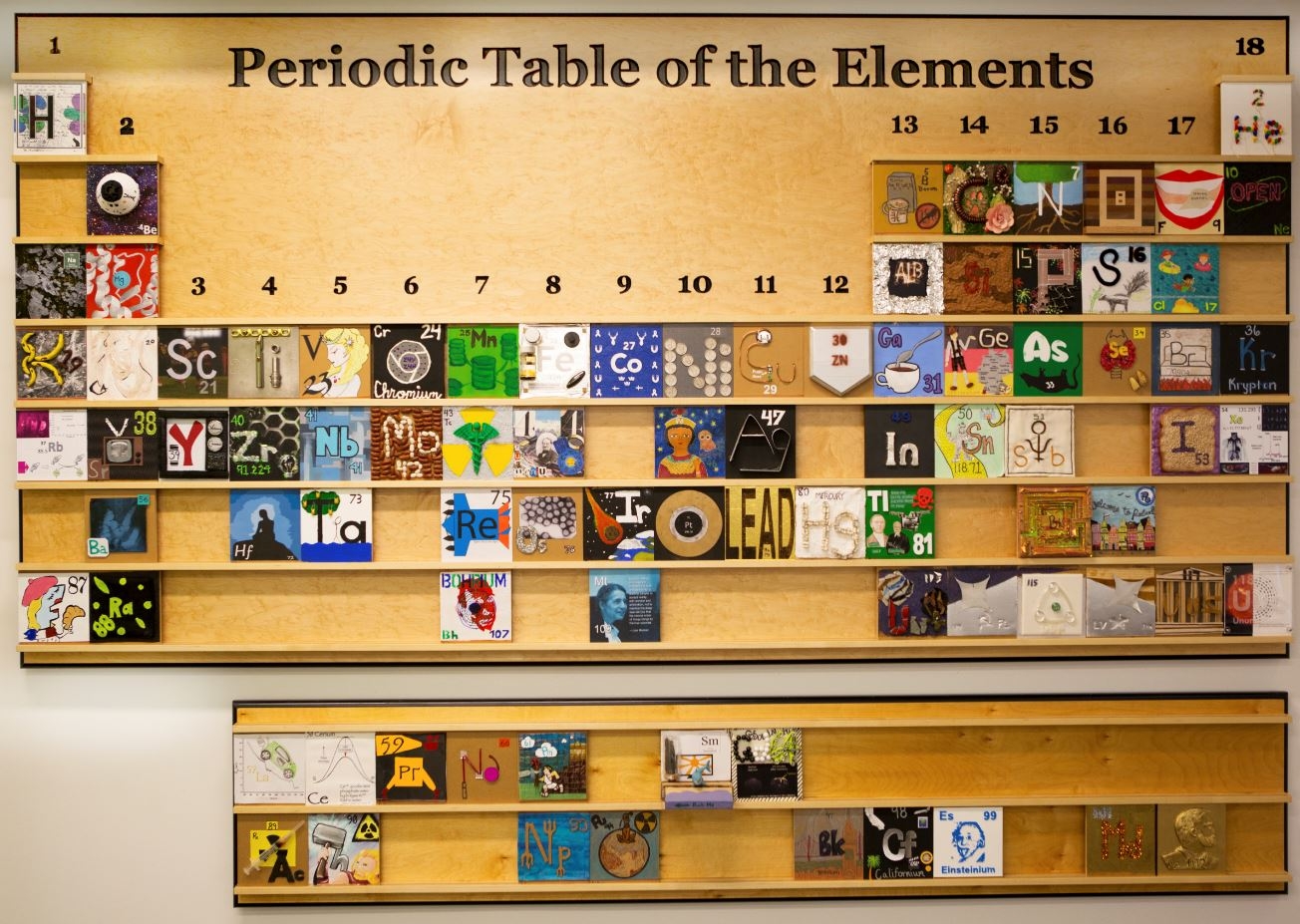
Fundamental to your understanding of Chemistry lies the periodic table. Live it, love it, and learn it. Know what the different groups are. If you can memorise the first 20 elements of the Periodic Table, then this will aid you greatly. I used a funny song to remember it in Grade 9 and I still remember it now! Pay attention to the patterns within the Periodic Table, know your valence electrons and remember how to draw the shells.

The mnemonic that I use to remember the elements within the Periodic Table is, “Harry heard little Betty bought chocolate nibbles on Friday, near Nanna’s magical albatross. Silly people should clean around king’s castles.”

Every letter at the start of each word within this mnemonic corresponds to the first letter of an element. By knowing this pattern, you can arrange the Periodic Table on a scrap sheet of paper. Once you learn the columns of the periodic table and if it’s an Alkaline earth metal or a Halogen (groups within the periodic table), then you can determine the properties of the element, the valence electrons or determine if it will be an ionic or covalent bond.

Many people also use songs to recall the elements of the periodic table, particularly if they are not familiar enough with the chemical symbols. This song is useful if this is you! Remember that you will only need to memorise the first 20 elements (which is up to 0.29 sec in this video). Perhaps you can practice the song with a friend!

Tip 3: The secret to success is using formulas!

68f604de86a5a5808133af69fa5c7b06

Conversion of known variables into the appropriate unit is one of the most common and disastrous errors I see students make. Even if you have correctly identified the correct equation and the variables, if you fail to use the correct units, then you simply won’t get the right answer! The easiest way to avoid this is to know what the SI units (International System of Units) are for each of the equations and keep track of them in your notebook. If in doubt, ask your teacher to explain the method of conversion or simply google the ‘SI units of equation XX’.

For example, if you are asked to calculate the force required to accelerate a race car that has a mass of 1.7 tonnes in a straight line at 1.8m/s2, the equation is F = ma. Here, F = the force in Newtons (N), m = the mass in kilograms (kg), and a = the acceleration in meters per second squared (m/s2).

If we calculate f where the mass is to be expressed in tonnes, the equation will be:

F = 1.7 x 1.8 m/s2

F = 3.06 Newtons

However, if we convert the mass into kg, then 1.7 tonnes = 1,700 kg. Accordingly, the equation will be:

F = 1,700 x 1.8 m/s2

F = 3,060 Newtons.


As you can see, there is a significant difference in the answers! It is important to always pay attention to the SI units when using an equation and to convert them before plugging them into the equation! A simple mistake like failing to do this, can affect your marks greatly!

Tip 4: Know how to write Extended Experimental Investigation (EEI) and Extended Response Questions (ERQ)

Capture

One of the biggest challenges faced by students while writing  an EEI or an EQ is the research component of the task. Before starting assignments of this magnitude, students should develop research questions to aid in their searching. This is just one of the many steps students should take to jump towards an ‘A’ grade. Many students lose marks because they struggle to 1) breakdown the question posed for the task and 2) struggle to develop research questions appropriately before narrowing their search down to a particular sub-topic. Before you start writing or experimenting, try to spend a day just breaking down your questions and reading as widely as possible before narrowing your search.

Remember, you need to see the whole picture before you can start putting the jigsaw pieces together! So read widely, watch YouTube videos on the topic and ask questions if you don’t understand something - peers, tutors and teachers are all excellent resources! Once you know your topic, it is much easier to decide where your findings should go in each paragraph, and how you should best structure and design your experiment for the most effective outcome.

Tip 5: Know different chemical reactions and avoid common errors

Capture

Responding to reactions is a classic question that you will likely find on a Chemistry exam and knowing this area of Chemistry will form the basis of most of the content that will be covered in the subject throughout High School. Often, you will be given either the reactants (starting material) or the products (the end result of a reaction) and be asked to fill in the blanks within the equation.

From my experience, students are generally confused as to how they are expected to know what the missing information is and how to answer questions of this kind. Just remember, there is nothing new under the sun! The reactions will follow predictable patterns which your teacher will run through in class. Decomposition, combustion, redox, and doubles displacement are all common types of chemical reactions that you will cross in your studies. You will most likely be expected to be able to identify these in an exam question. Knowing your Periodic Table and common compounds will really help at this stage! Before doing any calculations, it is always important to check the equation you are working with. Ask yourself: is it balanced? Do the amount of reactants equal the amount of products? If your answer is no, balance the equation first before moving on!

Firstly, count how many elements are on each side of the equation:

On the L hand side Fe = 2, O = 3 and C = 1

On the R hand side Fe = 1, O = 2 and C = 1

Since the numbers are not the same, we know that there are not the same number of products producing reactants. Equations are a scale. What is on one side of the equation, should be balanced on the other side.

To balance the equation, add numbers in front of the elements:

2Fe2O3 + 3C  ->  4Fe + 3CO2

Knowing how to do this correctly will come with practice and there are plenty of helpful videos and practice questions online that you can use to help. Sometimes, this balancing act will form part of a question without expressly stating what you are required to do. Thus, it’s important to get yourself in the habit of checking the equations before you do anything with them

Tip 6: Sometimes, experiments don’t go to plan and that’s okay!

Screen Shot 2018-08-28 at 11.06.07 am

As students, and even as future scientists, it is important to acknowledge that we live and experiment in an imperfect world. Heat is lost to the environment, reactants don’t always fully react and sometimes, you just don’t have any idea about what’s happening! This is something that students need to keep in mind when completing assessment. When you’re doing an EEI, you start the experiment thinking you’ll be able to attain specific results and  that the data will show XYZ. This is not always the case. Knowing this early on will ensure that you plan appropriately for time when things just don’t go the way you planned them. It is important to do this to ensure that you are not under time pressure to get the report finished. Take a deep breath and look at what you have. Look at the formulas and see what is known and what is unknown. Ask yourself: can you calculate anything with the data you’ve obtained? Can you see where you may have made an error? If so, write about it! Acknowledge where the experiment didn’t work perfectly and where the limitations were present. Identifying these things within your assignment is really what lifts an experiment from a B to an A!

In the discussion of your EEI or practical report write ups, an important point to always include is how the experimental process could have contributed to the discrepancies in the expected results. Was it a result of human error in measuring out products? Did the temperature in the room affect the experiment? This should only form a few sentences in any report (unless otherwise stated by the teacher) but is a fundamental aspect to include to lift the quality of any report.

Tip 7: Work in teams and ask for help!

Capture

You’re probably wondering how you’re supposed to identify all your errors, memorise the entire textbook and write an incredible report all within the short ten-week turnaround at school! Well, the biggest resource that you have has to be your peers around you. Even with tutors it can be difficult to really grapple with the concepts you need to know so studying in groups or pairs with your classmates can be effective. Identify someone that wants to achieve the same result as you and plan to work together. Sit together and make study notes or test each other’s knowledge with homemade flash cards. This helps with increasing your motivation to study and helps you identify gaps in your knowledge.

Ultimately, you should walk away from Chemistry understanding more about the world around you. Chemistry is interesting and fun, but it takes time, effort and dedication. Don’t be afraid to ask for help, many people have been where you are right now and pulled through!

The post How To Get An A In Chemistry appeared first on A Team Tuition.


from A Team Tuition https://ift.tt/2NBxgeM
via IFTTT

Monday, August 27, 2018

YEAR 11 STUDENT SOLIDIFIES SCHOLARSHIP AFTER GOING FROM C’s TO A’s IN 6 MONTHS

There exists this misapprehension that tutoring should only be sought if a student is failing. Parents, teachers and even students often overlook the obvious signs of a struggling student if they’re passing their courses because, “if they’re passing, they must be fine!” This assumption couldn’t be farther from the truth.

For some students, a pass is equivalent to their own personal failing. Students who were once ‘A’ grade students would be more than dissatisfied with receiving a ‘C’. These students have personal goals that exceed the ordinary and hope to achieve what others have not. Grade reductions only diminish their desire to go above and beyond the regular student.

We’ve encountered students falling from ‘A’ grades to ‘C’ grades more times than we can count. The struggle that follows is rebuilding the positive, growth mindset of these students to believe, once more, than they are capable of being ‘A’ grade students.

For Year 11 student Matthew Bungate, this fall resulted in him temporarily losing his academic scholarship before regaining it with the assistance of Academic Personal Trainer Keelan Hood. At the start of 2018, Matthew’s grades began to drop significantly which resulted in the withdrawal of his academic scholarship.

For Matt, he assumed that with ease, he’d be able to return to his former marks. However, in the weeks that followed he soon realised that his motivation and mindset were the pitfalls to regaining his previous admirable academic achievements. Concerned, Matt’s family sought the help of a tutor. At first, Matt was apprehensive and didn’t believe that a tutor was really necessary. However, this attitude soon readjusted itself after a few sessions with Keelan.

Matt started working with Keelan in January 2018 and since then, he’s exceeded the triumphs that he’d gained prior to receiving his academic scholarship. From the first tutoring session, the pair started with English being Matt’s lowest subject at the time and worked through the subject’s core elements: comprehension, proofreading and writing. Keelan was aware from the very beginning that academically, Matt was capable of achieving top scores in all of his classes but there was something outside of academia that needed to be the focus.

ATT-DEC17134

“With Matt, his greatest struggle was his confidence. Being awarded the scholarship only to lose it was detrimental to his self-esteem.”

Keelan recalls that most of the time spent in their sessions was dedicated to positive reinforcement and motivation.

“Constantly giving him positive encouragement made him aware that he could really retrieve his scholarship back. This made him really step up his game and overall improve his grades and attitude towards schooling.”

With the right mindset now in play, Matt’s transformation was underway starting with identifying what were Matt’s strengths and weaknesses.

“Matt’s mistakes included not studying correctly, not utilising his time management skills to the best of his ability and not being able to break assignments down where he needed to,” recalls Keelan.

Receiving ‘A’ grades in early high school years is a much simpler task than achieving ‘A’ grades in senior school and Matt had simply not adjusted to the transition and had not made this realisation. As a result, his mental space was not in the best form to be able to make the links between what had changed, and what had not.

With Matt being a primarily visual learner, Keelan was able to use the modules in the Creating A Students Program to work through barriers that most would not have turn their minds to: holding the right mindset, assignment and exam strategy, effective study practices and time management skills.

“The CAS program gave Matt an exceptional understanding of different ways to study and complete assignments and how to best manage all his time during the week.”

This, combined with using other strategies centred around visual imagery, Matt slowly began to respond better to studying again.

After Matt’s English skills began to re-emerge, the pair integrated other subjects into tutoring and began tackling assignments for Mathematics B & C, Physics and Chemistry. Not long after, Matt’s hard work and dedicated paid off and he found himself within the top 1% of students for each of these subjects! Matt’s perspective towards tutoring seemed to flip in an instant.

ATT-DEC17140

“School has gone from being a chore that I had to spend 30 hours a week at to 30 hours where I am putting my head down to achieve what I couldn’t before. Even on days where I have less motivation, I still put in work, seeing that it has paid off before, wanting to see it happen again,” smiles Matt.

“I learnt that I could achieve so much more with a better mindset and allowing people to help me than if I tried to do everything by myself. From regaining my scholarship and receiving better marks in class, it was great to see the hard work pay off.”

Reflecting on the tutoring experience, Keelan has found that Matt’s situation differed from other students that he’s crossed in the sense that content knowledge was never at the forefront on their to-learn list.

“The toughest past about tutoring Matt was not helping with his assignments, reading or preparing him for exams, but actually making him more confident to go through Year 11 with a positive outlook.

After six months of tutoring, Matt has been re-awarded his academic scholarship and is soaring above his other classmates. With his confidence and grades restored, he endeavours to graduate Year 12 and gain entry at university to study a Bachelor of Mechanical Engineering.

Matt’s story is a testament to perseverance and that the greatest climb that one has to experience is the climb after the fall. That doesn’t mean that you should be deterred though, because success is ensuring that you get up and dust yourself off more times than you fall. Knowing his resilient nature, we have full confidence that Matt is sure to succeed in any activity or course that he undertakes.

transform

The post YEAR 11 STUDENT SOLIDIFIES SCHOLARSHIP AFTER GOING FROM C’s TO A’s IN 6 MONTHS appeared first on A Team Tuition.


from A Team Tuition https://ift.tt/2PJritp
via IFTTT

Tuesday, August 21, 2018

Introducing Australia’s First Academic Gym!

After almost a decade in the industry, we’ve been exposed to the faults that currently exist in the education system. Australia was ranked 39 out of 41 countries for achieving quality education in 2017 by the United Nation’s Children’s Fund (UNICEF) which analysed the performance of students in reading, maths and science. As a first-world nation that usually ranks within the highest percentile for child well-being indicators, the data may come as a shock to Australians. However, the data reveals stark findings about our education system that have seemingly been ignored over the last decade. From jam-packed classrooms with an average 1:30 ratio, an over-reliance on standardised testing and a one teaching method fits all approach, there’s no wonder that Australian students are lagging behind their international counterparts.

With other countries adopting leading European teaching styles which focus on promoting self-directed learning (such as Finland which ranked #1 within the group), we believe we’ve found Australia’s solution. Our personalised program, Academic Personal Training, has seen 87% of our students soar from D/C grades to A/B Grades. Now, we’ve upgraded. We’d like to introduce you to an UNLIMITED tutoring experience through our ACADEMIC PERFORMANCE CENTRE (APC) or as we like to call it, Australia’s very first Academic Gym!

Why an Academic Gym?

With education being the leading pathway for students to establish their futures, Australia’s rankings are presenting a worrying trajectory. Our founder, Hayden McEvoy, has discovered after working with over 5000 families, students and multiple schools there’s a massive need in the market for individuals who can’t afford the hefty costs of tutoring or the high-tech resources and computers that wealthier families can afford. UNICEF found the same problem is urging the Australian Government to address this inequality that exists. With such a diverse wealth gap between families in Australia schools, we’ve decided to come up with a solution for those who cannot afford our one-on-one tutoring service.

This solution involved turning our one-on-one program into a group learning environment where our Academic Personal Trainers are coaching multiple students at once. We’ve been able to incorporate a similar program that centres around our Creating A Students Program into boarding schools across Queensland, and we’ve seen the results firsthand. Our vision for this next project is to create a facility that provides every student with every single possible resource that they need to achieve ‘A’ grades. We’re offering UNLIMITED tutoring through the purchase of a small subscription fee which also allows students to access state-of-the-art dual screen computers, laptops, textbooks, practice exams, worksheets and more from as little as $44.95 per week.

AU6A0966-2

The creation of an Academic Gym has never been done before within the Australian education system, yet its value is unquestionable. As students’ workload increases with each year level that they pass, consistent training of the neural pathways in the brain is necessary for students to adjust to the added study time and to sharpen their mental abilities for ideal performance. The development of one’s neural pathways determines the brain’s performance ability and just how much information may be absorbed at any given time. Continual exposure to learning increases the frequency and strength of the neural pathways in the brain. Consider this in terms of a hiking trail. At first, the trail will be overgrown with trees, and the pathway itself would be quite rocky. However, the more you walk across the pathway, the flatter it becomes, and the overgrown trees will gradually grow in a different direction making the journey easier. So, in simpler terms, if a student studies frequently and effectively, their brain will adjust to retaining and storing new information, making comprehension more evident which leads to a student receiving higher grades.

The same process applies for an athlete training for a marathon. To increase the strength of their muscles, weekly gym sessions are a necessity to be able to withstand long periods of physical activity. How do students learn to play a musical instrument? Through a practice routine that keeps them plucking at guitar strings and banging the drums for hours on end to the distress of many parents.

However way you view this, the common feature across these examples is practice. This is the cornerstone feature of the APC. We want to provide a service – comparable to a gym - where students can develop the neural pathways in the brain through consistent learning.

How does it work?

The way the APC functions is simple. We offer UNLIMITED tutoring through the purchase of a small subscription fee. Students will have access to state-of-the-art dual screen computers, laptops, textbooks, practice exams and worksheets just like you would if you accessed equipment at the gym. The only items that students should bring are their assignments or homework to complete in the session. We’re aiming to create autonomous yet inquisitorial learners who consider the program a ‘resource’ to aid in their learning. Through this approach, students can identify the learning styles that work for them and utilise their Academic Personal Trainers to guide them through their assessment pieces. This method has seen Finland’s literacy rate skyrocket to 100%.

In addition, specialised classes will be provided on Academic Strategy (such as Goal Setting, Time Management, Assignment Strategy and Managing Stress and Burnout) which incorporate the principles that underpin A Team Tuition’s Creating A Students Program. Senior Students can receive the bonus of real-life skills workshops designed to aid in the crafting of resumes, cover letters or university applications throughout school holiday periods.

Our first APC, located in Varsity Lakes, is equipped with our best and brightest Academic Personal Trainers available across five days of the week between the hours of 4pm-8pm. Students work in a group setting with a 1:7 tutor to student ratio to allow students to receive added attention and support outside of the typical 1:30 teacher to student ratio that schools currently offer. This provides students with the option to work in small groups based on subject or learning language preference, or to complete work independently in a quiet area.

The APC provides the optimal environment to foster student transformations by being designed for students to take control of their learning. This also allows us to tailor your child’s tutoring experience to the content that they are learning at school while also creating independent learners who are ultimately responsible for the outcomes of their learning.

AU6A0671

To distinguish ourselves from other tutoring companies, A Team Tuition offers expertise in any subject across secondary school including rather than just Maths and English. Our subject offerings include:

  • Maths A, Maths B and Maths C,
  • Physics, Chemistry and Biology,
  • English, English Extension, Modern and Ancient History, Geography, and
  • Business, Accounting, Legal Studies and Economics.

Currently, this service is for students in Year 6 and above but stay tuned – a primary program will be on its way soon!

How do I book?

To book a session, head to ateamtuition.com/academic-performance-centre/ to review the subscription options which range from 3-12 months or a NO-LOCK in contract option! Fill in the online form to complete your membership and head to our booking system to select your preferred days and time. Our staff are contactable on (07) 5526 0351 to assist with the booking. Payment options are quick and easy through our direct debit payment system, credit card payment through the online portal or the option to pay over the phone with one of our friendly staff members.

With the APC being in its early days of establishment, stay tuned for the launch of a formalised centre to be located in a separated facility from our head office. For more information, head to our website!

Quality education doesn’t need to empty the wallet, but a small fee for tutoring is an investment in your child’s future and for future generations to come. UNICEF’s rankings aren’t just an eye-opener for the Australian education system, but also for students and parents. Building a student’s learning capabilities is a small step to opening the door of opportunities for them, and our Academic Performance Centre is designed to bridge the gap that exists between learning and success.

12 MONTH MEMBERSHIP

$4495/weekly

  • Unlimited Tutoring Days
  • 2-Week Break
  • No Sign-Up Fee
  • Unlimited Access To All Resources
SIGN UP NOW

6-MONTH MEMBERSHIP

$4995/weekly

  • Unlimited Tutoring Days
  • 2-Week Break
  • No Sign-Up Fee
  • Unlimited Access To All Resources
SIGN UP NOW

3-MONTH MEMBERSHIP

$5495/weekly

  • Unlimited Tutoring Days
  • 2-Week Break
  • No Sign-Up Fee
  • Unlimited Access To All Resources
SIGN UP NOW

NO CONTRACT

$7495/weekly

  • Unlimited Tutoring Days
  • Cancel Anytime
  • No Sign-Up Fee
  • Unlimited Access To All Resources
SIGN UP NOW

The post Introducing Australia’s First Academic Gym! appeared first on A Team Tuition.


from A Team Tuition https://ift.tt/2LdDQpr
via IFTTT

Thursday, August 16, 2018

Meet the Winners of A Team Tuition’s $5,000 Tutoring Scholarship Program!

One of the first questions that every child is asked when they walk through the school doors for their very first day of prep is “What do you want to be when you grow up?” Answers range between astronauts, zoologists, Olympians, doctors, lawyers, builders and actors/actresses. However, these answers tend to change as students progress through schooling. Students who once dreamed of being doctors are disheartened by their average grades and opt for something else instead that’s a lot easier to obtain. The most heart-wrenching part to this process is seeing this follow through, especially when all that is holding these students back is the attainment of a few ‘A’ grades. At A Team Tuition, we want students’ first answer to “what do you want to be when you grow up” to be what they actually achieve.

Students who pass through our doors are all in the same predicament. We have students desiring to be veterinarians but are just scraping 'C' grades. This is just one of the many reasons why we started our Project Limitless Scholarship – a program dedicated to transforming struggling students into ‘A’ grade students so that they can fulfil their dreams of becoming aspiring doctors, lawyers, teachers, vets and engineers alike.

In April of last year, we awarded the first Project Limitless Scholarship, by partnering with local Gold Coast school Miami State High School, to Skylah Rhambold and Waide Carson who both soared from C-‘s to B’s and A’s by the end of the school year. Early this year, we embarked on the second instalment of the scholarship series and awarded an even bigger prize equalling $10,000 to Brisbane sisters Esther Abiya and Sarive Zena. Within one term, the impossible had occurred once more with Esther receiving A’s in 3 of her subjects and Sarive jumping from C’s to B’s! Now, A Team Tuition is elated to announce the winners of the third instalment of Project Limitless…Jake Budiasa-Moon and Talia Brown!

On Thursday the 26th July, A Team Tuition had the pleasure of gifting these two beyond deserving students with a life-changing prize; another $5,000 transformation scholarship! After the announcement of his name, Year 9 student Jake couldn’t wipe the smile from his face. Unfortunately, our second winner Talia was unable to make the announcement due to a Year 10 science excursion, but her Mum was just as excited to accept the prize on her behalf and perhaps showed even more excitement than Talia herself!


How were the students selected?

Handpicking the winners for this scholarship extended over 2 months and involved a rigorous selection process. Just like the year before, our CEO and Founder Hayden McEvoy presented the idea to the eager-eared Miami SHS student cohort. The response once again, was overwhelming with a total of 50 applications submitted! Students were asked to respond to two simple questions within their applications:

  • What would this scholarship mean to you?
  • What do you believe creates success at school?
Image 3

Senior representatives from A Team Tuition were then afforded the difficult task of creating the Top 10 short-list from 50 applications. In collaboration with Deputy Principal Jason Cross and Public Relations and Event Manager Catherine Crow from Miami SHS, the Top 10 applicants were ranked according to a set criterion (dubbed by A Team Tuition as the factors that make up an ‘A’ student) which assess a student’s:

  • Open-mindedness,
  • Resilience,
  • Grit,
  • Motivation and Drive, and
  • Eagerness to Learn.

In particular, we placed added emphasis on the attributes of ‘resilience’ and ‘grit’ as these traits encapsulate students who strive when faced with a challenge and who would not give up easily when overcoming set-backs. These characteristics were what ultimately determined the selection of the Top 6 students.

The final stage in the application process required students to sit down with a panel of interviewers comprised of Miami SHS and A Team Tuition staff. However, A Team Tuition did not set out to simply interview the students. We wanted to interview students’ parents/guardians and teachers who could provide an all-round view on each individual applicant. This allowed us to corroborate our findings through the application process and gain a more personal insight into each students’ motivation for applying and to ensure that we were selecting the students who truly saw the potential of the scholarship.

Talia Brown

Subject: Maths

Starting Grade: D

In the interview, Hayden recalls how captivated he was by Talia’s bubbly and positive aura as well as her desire to learn.  Her desire to do well in school was evident through her consistent participation extra-curricular activities such as in Tournament of Minds since Year 5 as well as in the school band playing the Trombone. After hearing how involved Talia is both in and outside of school and witnessing firsthand her contagious drive, we were surprised to find out that she was failing Maths. With high hopes of one day becoming a Neurosurgeon, it was evident that Talia already had the growth mindset to become an ‘A’ student but her grades just weren’t up to par.

Karen Brown, Talia’s mother recalls that she’s dreamed of becoming a Neurosurgeon since she was three and a half.

“We took her to a family doctor and there was a model of a brain and she asked what it was and if there was a doctor trained specifically to treat brains. Then when she was in Prep, her teacher asked her ‘what do you want to be when you grow up?’

Talia

She drew a picture of a doctor treating a patient. She’s always wanted to do that, but she just knows that her current grades won’t get her there.”

Karen is also aware that Talia has struggled a bit in Chemistry and Physics, both of which are prerequisites to be able to study in this field and is hoping the scholarship will have an accumulative effect on most of her grades. Her teachers are confident that by applying the right strategies, she most certainly could boost her marks in all of these subjects.

Karen is hoping that Talia will become more confident and realise that she does have the potential to reach an ‘A’ grade in these subjects prior to her starting her senior schooling.

“She has it in her, but she struggles to find it. Not only that but I want her to have pride in her work and to feel chuffed because she’s got something right finally. I just want to see her happy and feeling smart.”

When asked what it means to her as a parent seeing her child receive this scholarship, Karen couldn’t stop smiling.

“It’s just unbelievable, things like this don’t happen. For someone who has tried so hard to get her grades up but just can’t seem to make sense of it, this is huge.”

Jake

Jake Budiasa-Moon

Subject: English

Starting Grade: C

Hayden was immediately impressed by how well-spoken Jake was in his interview and described him as a “high motivated, altruistic individual with an old soul” with quite the strong handshake. After the panel heard about Jake’s sporting successes, it was evident that Jake exhibited the level of commitment that would help propel him towards higher grades when combined with learning the right study strategies.

Jake’s motivation for applying for the scholarship was based on his desire to improve his grades in order to continue his studies at university. Jake has been inspired by his very own humanities teacher, Mr Vine, to study teaching in the hopes of one day becoming either a Languages or Physical Education teacher. As an avid lover of all sports, including football, tennis, basketball and even golf, it comes as no surprise that Jake would love to pursue a career in doing what he does best!

However, while Jake knows that his sporting ability is up for the challenge, he’s concerned that his grades will be his downfall and is hoping the scholarship will not only boost his grades, but provide him with confidence during exams and tests while learning how to study at home without getting side-tracked. Noting that Jake is primarily a kinaesthetic learner, it’s simply a matter of incorporating study strategies that will work best for him!

For Jake, receiving the transformation scholarship means that he can be guided towards reaching his potential.

“I do well in class but when it comes to a test I realise ‘OMG’ I don’t know what I’m doing! I want to be able to push past this and get an A.”


Tutors

Narrowing down 110 tutors within the company to just 2 was no easy task for the management team here at A Team Tuition with many tutors being suitable candidates to work alongside the scholarship winners. Ultimately, selecting the two Academic Personal Trainers to assist our latest scholarship winners was based on personality compatibility, subject expertise, tutoring experience as well as career aspirations. Without further ado, the tutors are…

Talia’s Tutor: Miss Jessica Chew

Jess is completing a dual degree of a Bachelor of Laws/Bachelor of Commerce at Bond University. When she isn’t out on the water rowing, she’s involved in many non-profit organisations to raise awareness for issues extending both within the local community and abroad. Jess is no stranger to working with younger students – she even has a younger sister of her own!

As a maths enthusiast, Jess is eager to work with Talia in improving and excelling in her first year of Senior Maths. They will be focusing predominantly on algebra this term, and taking the A’s from the equations and back into the report card!

Since Talia is in Year 10 this year, she will be part of the first cohort in Queensland to complete senior schooling through the ATAR system. So, along with helping with her Maths homework, Jess will be introducing Talia to how ATAR works.

jess
mak 2

Jake’s Tutor: Miss Makaela Fehlhaber

Makaela, or ‘Mak’, is also studying at Bond University and is completing a dual degree of a Bachelor of Laws (Honours)/Bachelor of International Relations.

Her passion for education stems far beyond tutoring at A Team Tuition and she has been involved in many non-profit organisations including participating in One Girl’s Do it in a Dress campaign to raise money for scholarship bursaries for students in Sierra Leonne and Uganda as part of her role when on the United Nation’s Student Association.

Mak is no stranger to A Team Tuition’s Project Limitless Series and has been helping Brisbane scholarship winner Sarive Zena in her humanities subjects and on her journey towards achieving those ‘A’ grades in her senior year.

As an English Enthusiast, Mak is excited to kick-start Jake’s transformation with a Shakespearean Unit focusing on Romeo and Juliet where he will be revisioning this timeless tale into his own narrative.

The Transformation Plan

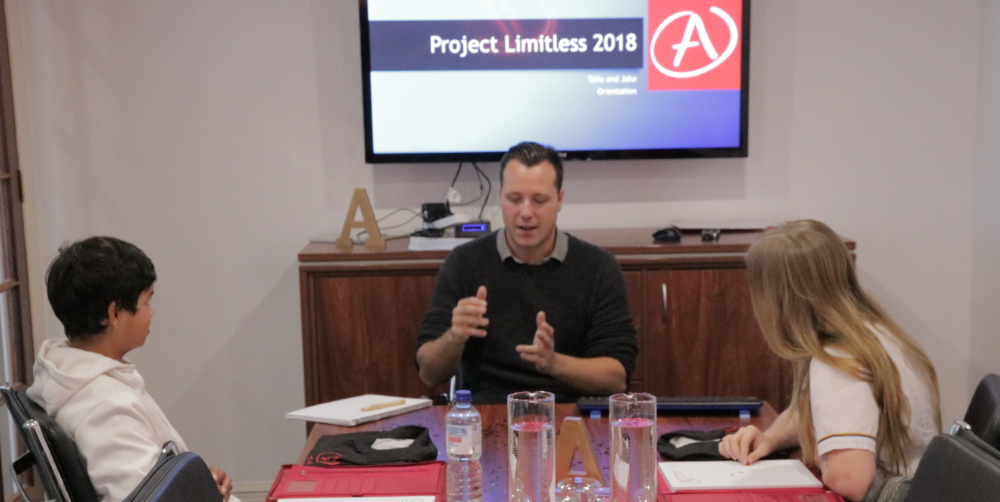
Project Limitless is scheduled to begin the week of the 6th August in week 4 of the school term. Students, parents and tutors have all been introduced and now it’s time to hit the ground running. Last week, both Talia and Jake attended the orientation luncheon where they were briefed on the plan going forward. Both students received an overview of what to expect over the next few months as well as listening to a presentation by Hayden about the Creating A Students Program and what their tutors will be covering in their subsequent sessions. Each student will work with their assigned tutor for an hour and a half each week for the rest of the school year.

Project Limitless was designed to prove that with the right drive, attitude, mindset and persistence, any student can become an ‘A’ student and we have full confidence that this pair will be no different than the students before them! Most importantly, we want to help both Jake and Talia fulfil their primary school dreams that they’ve held since the day they were asked “what do you want to be when you grow up?”

Keep up to date on our social media platforms for updates on Jake and Talia’s progress and their journey to becoming ‘A’ level students in no time! Watch this space.

The post Meet the Winners of A Team Tuition’s $5,000 Tutoring Scholarship Program! appeared first on A Team Tuition.


from A Team Tuition https://ift.tt/2wa4IBh
via IFTTT